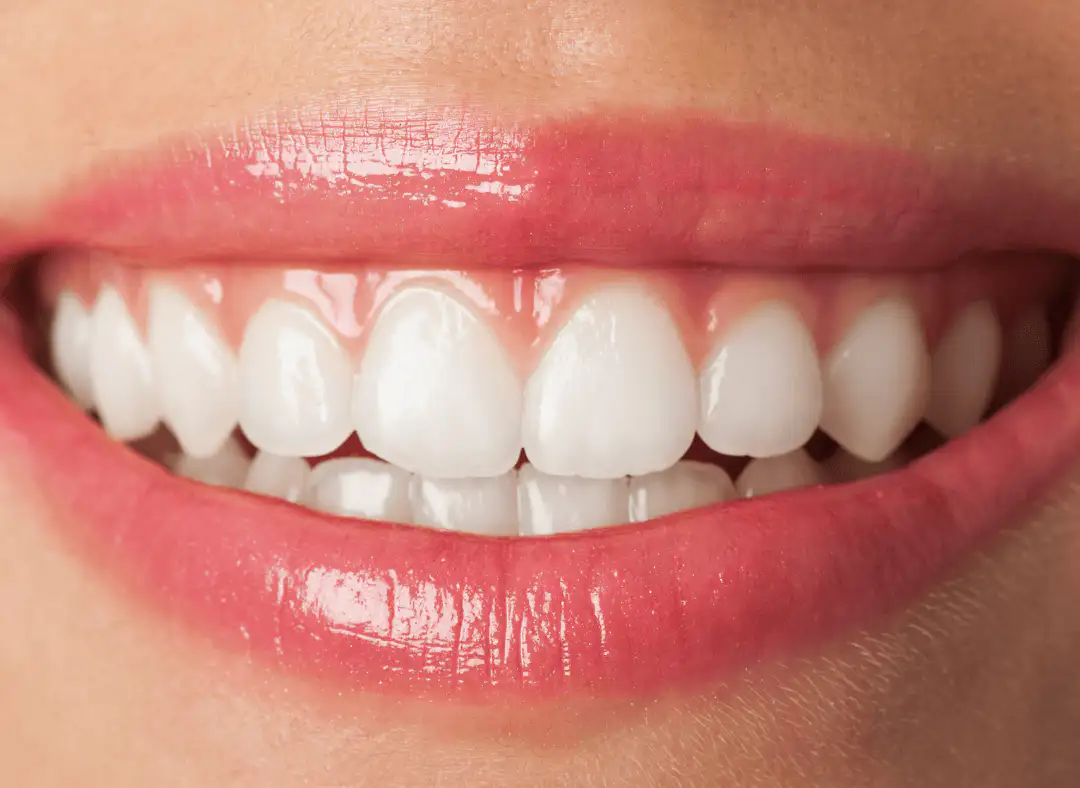
Is it too late to have perfectly straight teeth even as an adult? Will it hurt more? How will it look on a professional working person? We asked our lead dentist, Dr. Márta Fülöp Papp.
What Is Orthodontic Treatment?
Nowadays, orthodontic treatment in adulthood is a common and gentle dental procedure that allows us to align mispositioned teeth into their correct places.
When is it needed?
We recommend wearing braces if the teeth are misaligned, causing aesthetic and chewing problems. With braces, we can correct crowding, gaps, tilted teeth or protruding teeth. Misaligned teeth are not just an aesthetic problem. As well as making chewing and eating painful, they can make it difficult to speak clearly and also increase the risk of tooth decay and other gum diseases.
What is necessary to establish a full diagnosis?
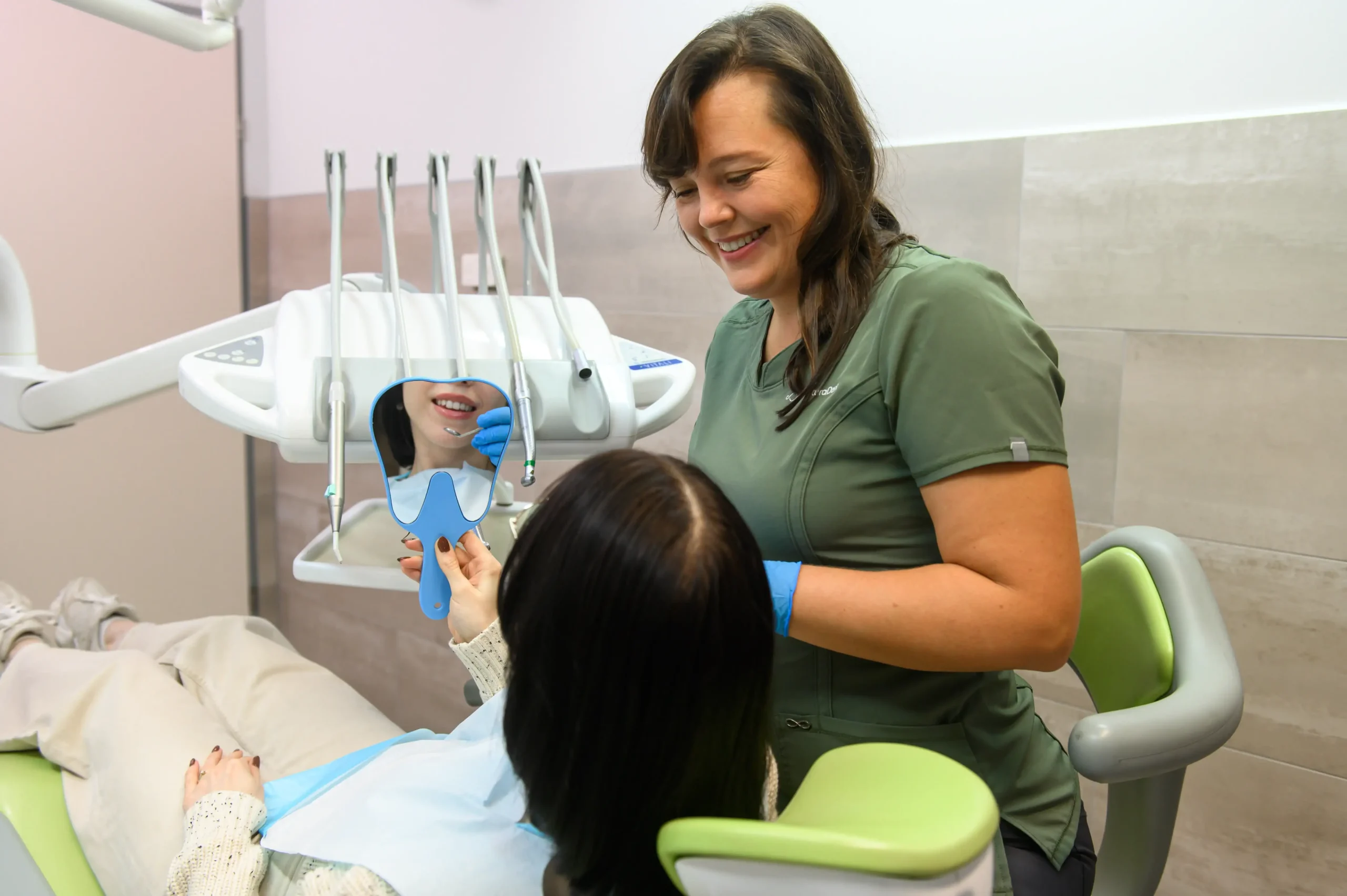
At our practice, every treatment – including orthodontic treatment – is based on precise planning. We always begin the assessment by taking a digital panoramic X-ray. In addition, the following is required to fabricate the orthodontic appliance:
impression, which we take quickly and painlessly using a digital intraoral scanner. This method replaces the previous, often uncomfortable and time-consuming impression-taking procedure, and makes the planning even more accurate. The orthodontic process also includes the
Photographic documentation, which helps our specialist tailor the treatment plan and monitor the results.
What Are the Most Common Reasons Adults Choose Orthodontic Treatment?
When it comes to orthodontics, our adult patients primarily come to us at Naturadent Aesthetic and Laser Dentistry for aesthetic orthodontic treatment.
Aesthetic orthodontics primarily concerns the alignment of the front teeth, so-called frontal teeth. As well as aesthetic reasons, there can also be health reasons for orthodontics, such as when
The lower and upper rows of teeth do not align properly, and the teeth do not fit together correctly.. If there is no healthy, functional contact between the upper and lower teeth, then it can occur
Clenching, teeth grinding, tooth fracture, tooth displacement, temporomandibular joint pain. Orthodontic treatment is one possible solution to these problems even in adulthood, as it can help achieve the best possible alignment. Any unnatural chewing forces acting on the upper or lower teeth can be eliminated, and the pressure on the jaw joint can be relieved.
Orthodontics after prosthetics
Our patients will no doubt have noticed that when we are fitting a replacement for a missing tooth – that is, an inlay, an onlay or a crown – we examine the tooth very carefully and plan exactly how the restoration should fit. After all, if the initial problem that led to the tooth loss was caused by incorrect bite force, we must relieve the load on the restoration as much as possible. In cases where the dental restoration will be subjected to unhealthy stress, we usually recommend carrying out what is known as ‘orthodontic treatment for health reasons’, even if only for a short period. This helps, on the one hand, to realign the problematic tooth and, on the other, to relieve pressure on the tooth surface and edges, which will result in a much more durable dental restoration.
How does orthodontic treatment in adulthood differ from the process in childhood?
In adulthood, our bones and joints are stiffer than they were in childhood. This also applies to our teeth. In adulthood – that is, after the age of 16–25 – orthodontic treatment is only possible using so-called self-ligating fixed braces, which apply gentle forces. Due to the stiffness of connective tissue and joints in adulthood, the process itself takes longer and therefore requires more patience from the patient. The only
In aesthetic orthodontics, necessary minor corrections can be made in as little as six months.. Even this amount of time may be sufficient for our teeth to achieve the correct alignment and optimal position. I must point out here that we, the dentists at Naturadent, are fundamentally guided by the trust placed in us and our professional expertise, and we strive to restore the health of the teeth, gums and the surrounding oral area. Furthermore, it is important that we help our patients to restore and maintain the health of their own bodies. Aligning the teeth and finding their natural, optimal, protected and stable position is also a key part of our objectives. After all, from the perspective of the body’s overall health,
even if our first, so-called smile teeth are beautiful and pretty, it's no use if the molars behind them are diseased, and they strain against each other while chewing. Moreover, even if every single one of our teeth is healthy, if their unnatural positioning causes them to press against one another to such an extent whilst chewing that it could lead to problems, injury or pain at any moment, it is all for nothing. In addition to tooth decay, broken teeth and teeth grinding, protruding or misaligned teeth can also cause injuries to our tongue and the inside of our mouth. These injuries usually occur whilst chewing and, as they are subject to constant surface contact and a moist environment, they are slower to heal.
Most adult orthodontic treatments typically require a duration of 1-2 years. In the imagination of today's adults, the image of old, exclusively metal, painful, and time-consuming orthodontics still lives on. How has this technology changed today?
Thanks to modern dental technologies, the discomfort and duration of orthodontic treatment have been reduced, and its appearance has become much more aesthetic, almost unnoticeable, today. At our practice, we use only the most advanced technologies in the field of orthodontics. We use and fit so-called self-ligating – also known as self-closing – braces onto our patients’ teeth to improve their alignment. The secret behind these is that, unlike traditional metal braces, the archwire is secured by built-in locks within the brackets themselves, rather than by the rubber bands typically found on conventional braces. This clasp tightens progressively, so the archwire effectively works by itself. This is where the term ‘self-ligating’ comes from; it allows the teeth to move in the most appropriate and beneficial way along the pre-planned arch.
Self-ligating orthodontics results in a faster-than-average treatment process, with low friction and requiring fewer dental check-ups., ...just like traditional methods, this way we can save our patients a lot of time.
What options do we have as adults if we want to straighten our teeth as aesthetically as possible, or even undetectably?
Traditional metal braces caused problems for many people due to their appearance, metal allergies or other considerations. At our practice, our dentists do not use allergenic materials that are harmful, ineffective or act as allergens to our patients’ bodies. When it comes to orthodontic treatment, we do not use braces made from materials that could trigger allergic reactions, whether the treatment is for children or adults. If, for example, someone has a metal allergy, they can rest assured that
You can choose metal-free orthodontic treatment. .
The most aesthetic self-ligating braces feature brackets made from white ceramic, making them difficult to notice even up close. Furthermore, in some cases, invisible braces are also an option. These are fitted to the teeth from the inside, against the tongue, so they are truly imperceptible and invisible from the outside. These braces may feel a bit strange at first – you do need to get used to wearing them – but over time, they will become invisible and unnoticeable to us too. Thanks to modern dental technologies, uncomfortable and “conspicuous” braces are now a thing of the past. The
Invisible, world-class Invisalign orthodontic method yet the „future is in the present”. The Invisalign method, which uses computer-aided design to promise a predictable (and adjustable during treatment) end result, can correct minor misalignments and small aesthetic issues in as little as 2–4 months. The virtually invisible, metal-free aligners can be removed at any time and are extremely comfortable. They do not interfere with speech, and there is no need to learn a new tooth-brushing technique. No wonder that worldwide, already
over 14 million satisfied patients She owes her flawless smile to this innovative solution.
Caring for your teeth with braces – how does your daily dental care and tooth-brushing routine change with braces?
Good oral hygiene is particularly important during orthodontic treatment to ensure its success. When wearing fixed braces, food particles can more easily remain in the oral cavity and get stuck in the appliance, which contributes to the development of tooth decay.
Therefore, while wearing the device, frequent brushing and cleaning your teeth immediately after meals are extremely important. using a traditional toothbrush or special instruments. In addition to regular home dental care, we recommend a dental hygiene treatment for our orthodontic patients every three months, which
discount dental care package in the form of. During a professional dental hygiene treatment, we carry out a thorough cleaning of the teeth, supplemented by polishing and, where necessary, sandblasting. Part of the dental hygiene treatment is a
Personalised dental care advice which helps to maintain the correct oral hygiene routine even when wearing braces, thus maintaining healthy oral hygiene.
We welcome you in our practice!
Book an appointment for a consultation today, and we will, at the time of fitting your braces
We will also give you a professional cleaning kit as a gift., which is suitable for travel or even everyday use with its practical case! Whether you have questions about orthodontic treatment in childhood or adulthood, please feel free to ask.
our dentists, our orthodontist your assistance. Our team’s experienced, well-prepared, caring, and always cheerful members are happy to be at your and your family's disposal with their full expertise, up-to-date knowledge, care, and full attention.