


Nowadays, missing teeth can no longer be regarded as merely an aesthetic issue, particularly given that dental implants are now available at the best dental practices in Budapest and, indeed, offer a long-lasting, effective and aesthetically pleasing solution in such cases.
The biggest problem with a missing tooth is that it not only causes aesthetic concerns, but also affects chewing, speech, facial appearance and even the health of the oral cavity.
Moreover, thanks to modern implantology, it is now possible to produce dental prostheses that are extremely close to natural teeth, not only in appearance but also in terms of function.
Why is it important to replace a missing tooth, how does the implantation procedure work, how durable is it, and why is it considered a long-term investment? dental implants Budapest in their surgeries? In this article, we’ve been looking for answers to these questions!
Why is it important to replace a missing tooth?
Many people tend to view missing teeth as a mere aesthetic problem, even though the reality is far more complex than that.
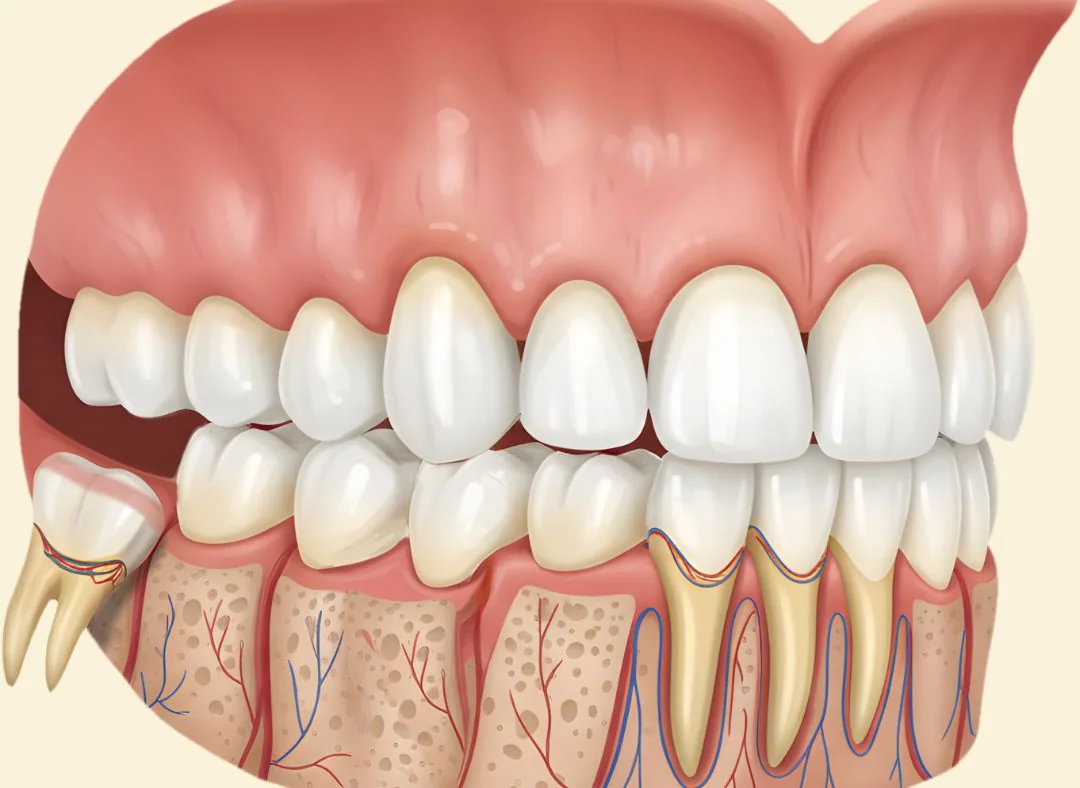
Tooth loss is not a condition without consequences. On the contrary, its complications can affect the entire set of teeth and the jaw. This is because untreated tooth loss can
- the neighbouring teeth may shift out of position;
- the bite balance may be disrupted;
- this can lead to a deterioration in chewing function and the development of temporomandibular joint problems;
- Furthermore, without any load, the jawbone may begin to atrophy and weaken;
- If several teeth are missing, the shape and structure of the face may also change.
This is particularly true in cases where teeth have been missing for a long time, as changes in the load on the jawbone cause the bone in the affected area to gradually lose mass, which may subsequently make implantation impossible.
Of course, there are now bone replacement techniques available to address this condition, but these can extend the duration of treatment by as many as several months.
Why are dental implants the most advanced solution for tooth replacement?
Although traditional dental bridges and crowns are very good tooth replacement solutions, their applicability is severely limited.
If there is not enough tooth structure or a sufficient number of healthy teeth for anchorage, these methods of tooth replacement cannot be used.
In most dental practices in Budapest, dental implants are the first option considered in such cases, as they enable
- even in the event of complete tooth loss, the tooth can be replaced;
- it can be used to replace either a single tooth or several teeth;
- If necessary, a full set of fixed dentures can be secured using it.
The implant has earned the title of ‘state-of-the-art dental restoration solution’ because
- offers a look that appears exceptionally natural;
- restores stable chewing function and the sensation of biting;
- has a long service life;
- helps to maintain the structure of the jawbone;
- fits perfectly into the dentures;
- It can serve as a replacement for dentures even in cases where several teeth are missing.
How is dental implant surgery carried out in Budapest?
State-of-the-art implant treatments usually consist of several stages. In modern dental practices, each stage is, of course, tailored to the individual, but the basic procedures and steps involved are similar everywhere.
Let’s take a look at how a dental implant is fitted, step by step:
Consultation and assessment
The key to a high-quality and durable implant is always the preparatory work. A thorough consultation and assessment are vital for this, and are essential before the procedure can move on to the planning stage.
As part of the assessment, it is not only the condition of the teeth that is examined, but also some form of imaging technique (in the case of implants, mainly dental 3D CBCT) is also used, alongside digital scanning and bite analysis.
Treatment plan
The assessment is important because it determines the future treatment plan, including, for example, whether bone grafting is required or whether the patient has sufficient bone mass for implant placement.
As part of the treatment plan, the type of implant to be used and its exact position are determined – in short, everything that may be essential for a sufficiently long-lasting end result.
Implant insertion
A key part of the dental restoration in question is when the implant itself is placed into the jawbone. This is always carried out under local anaesthetic, and the procedure itself is generally painless, causing at most some discomfort.
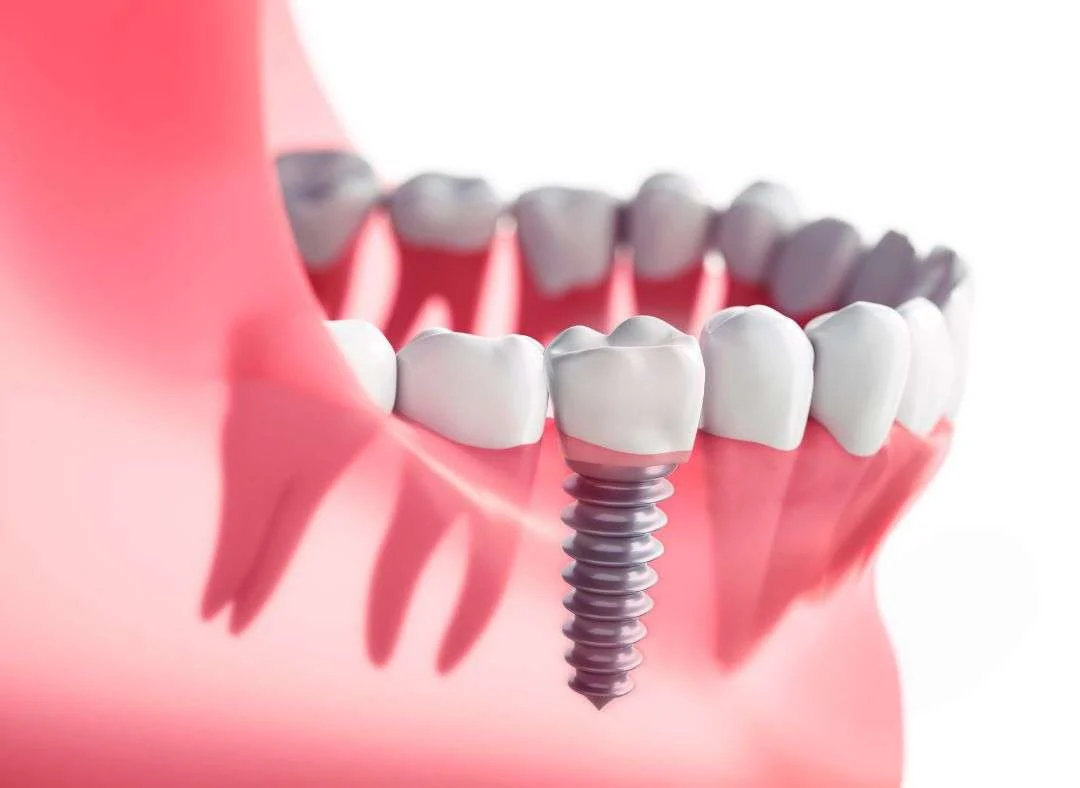
The implant itself is placed into the jawbone, after which a healing process begins that lasts several weeks or months; as part of this process, the bone tissue completely surrounds – that is, anchors – the artificial root, which is usually made of titanium.
Healing and ossification
The healing time is usually 3 months, but this varies from patient to patient. In some cases – particularly where bone grafting is involved – it may take up to 6 months before the implant can bear a normal load.
The healing period depends on the quality of the bone, the location of the implant, smoking habits and, of course, general health.
Fitting of a permanent dental prosthesis
The implant can only be loaded once osseointegration has taken place and proper healing has occurred; in other words, only then can the crown, bridge or full denture be attached to it.
The decision as to when a permanent restoration can be fitted onto the implant is always made by the implantologist performing the procedure, as placing a load on the implant too early can lead to displacement or rejection.
What should we look out for when choosing dental implants in Budapest?
Dental implants are a service available at several dental practices in Budapest, which is precisely why it is important to give careful consideration to which one to choose in order to achieve the desired result.
The following factors may be particularly important in this regard:
- Professional background:If you want a durable and safe implant, you should choose a dental practice where the implantologist is qualified, highly experienced and works in accordance with strict protocols.
- Digital diagnostics:Digital diagnostics are required for implant placement – such as CBCT imaging – in order to maximise both the safety and accuracy of the procedure.
- Guarantee and quality control:You should only choose a dental practice for dental implants that offers a guarantee and where professional aftercare is available alongside regular check-ups.
- Patient reviews:In the world of the internet, you can find genuine patient reviews of every dental practice online. You should always check these before making your choice, and opt for the one that has received the most favourable reviews.
Dental implants in Budapest: that’s why NaturaDent is the best choice!
A NaturaDent egy olyan Dentistry in Budapest, where implantology is one of the key services.
The head dentist at our practice is Dr Márta Fülöp-Papp, M.Sc., M.Sc. M.Sc., an implantologist who gained her practical experience and qualifications in Germany; she also possesses outstanding knowledge and experience in the field of implantology and is currently conducting research in this area, the results of which she publishes in specialist journals both in Hungary and abroad.
As well as the dentist themselves, here are some reasons why you should choose NaturaDent for dental implants:
- State-of-the-art technologies:At the clinic, the groundwork for implant treatment is laid using state-of-the-art diagnostic techniques, such as CBCT imaging, and the development of a precise treatment plan.
- Experienced specialists:Alongside Dr Márta Fülöp-Papp, M.Sc., NaturaDent employs several specialists with extensive experience, who ensure precise implant placement based on a personalised treatment plan.
- Premium implant systems:NaturaDent uses only reliable, internationally recognised implants to ensure long-term stability and reliability.
- Comprehensive solutions, all in one place:At our clinic, we have solutions even for complex problems, so when it comes to implants, we can provide the appropriate facilities for every procedure, even if, for example, bone grafting is required.
- A patient-centred approach:At NaturaDent, providing patients with the right information, communicating empathetically and creating a calm atmosphere play a key role, as these form the basis for successful treatments.
- An excellent location in Budapest:The surgery is situated in one of Budapest’s central locations (1024 Budapest, Lövőház utca 39), which is easily accessible by both public transport and car, and parking is not a problem.
- Immediate oOnline booking:If we only have a minute to book an appointment, NaturaDent Online appointment booking Its system provides a fast and reliable platform for this, anywhere, anytime.
How much does a dental implant cost in Budapest?
Digital dental implants: current fees and consultation
It is difficult, indeed almost impossible, to quote a specific price for a dental implant, as the final cost is always determined by the type of implant, any need for bone grafting, the material of the crown and the various oral surgical procedures involved.
As is clear from the above, the placement of a dental implant always involves several stages; consequently, the cost of a dental implant in Budapest can range from 300,000 forints to as much as 600,000 forints per tooth.
Dental implants in Budapest? NaturaDent looks forward to welcoming you too!
Today, dental implants are the most advanced and reliable method of tooth replacement; as well as offering aesthetic benefits, they restore patients’ ability to chew and bite, maintain the health of the jawbone, and, in addition to all this, contribute to an improved quality of life.
An effective dental implant at the NaturaDent clinic in Budapest not only provides patients with world-class technology, but also personalised treatment and guaranteed quality.
If you need dental prosthetics, you can trust us – professional expertise, modern technology and a patient-centred approach go hand in hand here.
Frequently asked questions
Is the placement of a dental implant painful?
In Budapest’s modern dental practices, the very latest anaesthetic techniques are used for dental implants; as a result, the procedure is generally pain-free, and patients typically feel only pressure and a slight vibration during the procedure.
Following the implant, you may experience slight swelling, tenderness or minor pain, but the procedure itself does not usually cause any significant discomfort.
How long does a dental implant last?
Dental implants of the right quality can remain stable for decades, provided they are checked regularly and proper oral hygiene is maintained. Smoking and periodontal disease naturally have a negative impact on their lifespan.
Can dental implants be used even in cases of complete tooth loss?
Of course, but in such cases, several implants need to be placed at the same time so that the patient can have a fixed denture. The prosthesis can be attached to these implants almost invisibly, so it can provide a much more comfortable and natural feel than a removable denture.
Can anyone have a dental implant fitted?
No, this is always a matter of individual assessment, which is determined, for example, by the structure of the jawbone and the patient’s general state of health. If a patient has a severe lack of bone, the implant procedure must be preceded by bone grafting.
Why is it worth having dental implants fitted in Budapest in particular?
Because dental practices in Budapest are by far the best equipped in terms of technology, dentists have access to solutions such as 3D CBCT diagnostics and digital planning.
At NaturaDent Dental Clinic, this is complemented by premium implant systems, as well as outstanding professional experience and expertise!