


Wisdom tooth removal in Budapest is considered one of the most common oral surgery procedures, yet there are still a great many misconceptions and uncertainties surrounding it.
However, thanks to modern dental techniques, this procedure can now be carried out not only safely, but also virtually painlessly and effectively; early detection is therefore of the utmost importance in this regard.
This is because many people only seek professional help once pain, swelling, inflammation or other discomfort has set in, even though, with an early diagnosis, wisdom teeth could be treated using less invasive methods.
The Wisdom tooth extraction in BudapestIt is also available at the NaturaDent clinic – supplemented by laser treatment – and this article reveals not only the benefits of this treatment but also everything you need to know about problems associated with wisdom teeth.
Why do wisdom teeth cause so many problems?
Wisdom teeth, also known as third molars, usually erupt between the ages of 17 and 25, which is well after the permanent teeth have fully developed.
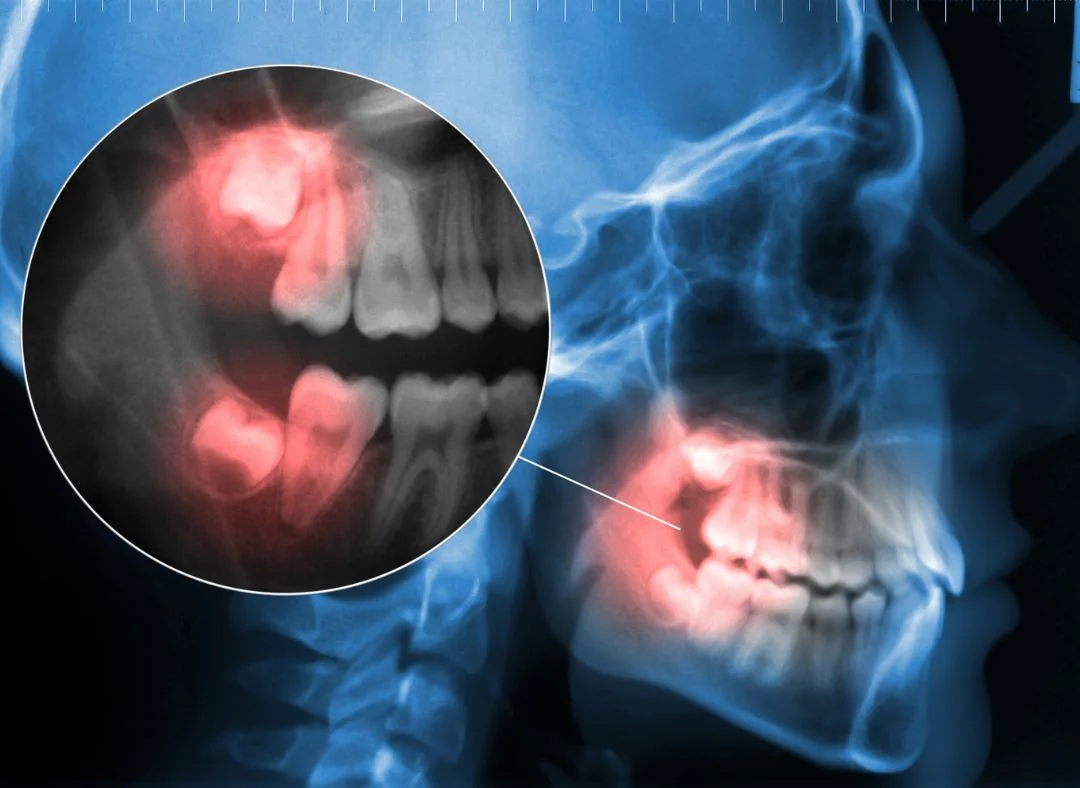
They often cause problems because, over the centuries, the size of the human jaw has decreased; as a result, there is not enough space in the mouths of many patients for their wisdom teeth, of which there are normally four: two at the bottom and two at the top.
Due to a lack of space, it is common for
- the wisdom teeth either do not erupt at all or only partially erupt;
- or they may grow at an angle or become trapped in the bone;
- cause crowding between the existing teeth;
- cause recurrent gum inflammation, jaw pain or headaches;
- Furthermore, as they are more difficult to clean, they also increase the risk of tooth decay.
Each of these is extremely unpleasant, but a partially erupted wisdom tooth causes the most problems, as bacteria can build up beneath the gum, which often leads to inflammation, bad breath and even more serious infections.
Why is it important to identify problematic wisdom teeth at an early stage?
Regular dental check-ups are important in relation to wisdom teeth because any abnormalities can be detected – even with a simple dental X-ray – before they cause any actual discomfort.
Dental check-ups therefore make it possible to diagnose conditions such as a partially erupted wisdom tooth or recurrent gingivitis even when there are no symptoms, meaning that appropriate treatment can be carried out before more serious infections or crowding develop.
Wisdom tooth extraction is often carried out at the NaturaDent clinic in Budapest even when there are no symptoms, as we pay particular attention to the early detection of all dental problems, for which we have advanced imaging techniques at our disposal.
What symptoms indicate that a wisdom tooth needs to be removed?
As has already become clear from the above, not all wisdom tooth problems are accompanied by immediate or easily recognisable symptoms, but there are certain symptoms for which it is advisable to seek dental help without delay.
Symptoms such as these
- throbbing pain in the back teeth, which often radiates into the jaw or the ear;
- swollen, red gums around the wisdom tooth;
- difficulty opening the mouth or pain when doing so;
- pain and difficulty when swallowing;
- constant jaw tension;
- or a sort of unpleasant, tightening sensation, as if something were constantly pressing down on and tightening our entire set of teeth.
Professional guidelines clearly state that, in the event of the above symptoms, the removal of a wisdom tooth is usually unavoidable.
It is important to note, however, that even in cases where wisdom teeth are not yet causing any symptoms but appear problematic during dental imaging or a clinical assessment, it is often essential to extract the affected tooth.
When is it necessary to have a wisdom tooth removed?
If a wisdom tooth has come through, is in the correct position, can be cleaned properly and is not causing any problems, then there is no need to have it removed. In all other cases, however, the tooth in question must be extracted.
This is unavoidable in the following cases:
- the wisdom tooth had grown in at an angle;
- exerts strong pressure on the neighbouring tooth or the jaw;
- cannot get out properly;
- causes recurrent, chronic inflammation;
- cannot be cleaned properly, and becomes decayed;
- the patient is due to undergo orthodontic treatment, and the wisdom tooth is hindering the treatment;
- the tooth may cause, or may have caused, a cyst or bone lesion.
If a wisdom tooth is to be removed in Budapest at the NaturaDent clinic, we always make the decision following a digital diagnostic assessment.
A panoramic X-ray is often sufficient, but in many cases a 3D CBCT scan is also required to obtain a sufficiently accurate picture of the tooth’s position and its relationship to the nerve canals, thereby preventing any potential complications.
How is a wisdom tooth removed in Budapest?
Wisdom tooth extraction is carried out in a similar manner and in the same sequence at most dental practices in Budapest; however, there may be significant differences in the techniques used.
NaturaDent, for example, is unique in that it can also support the procedure with laser treatment – preserving the gum tissue during wisdom tooth extraction – but we will return to this later.
Let’s first look at the removal process, which, thanks to modern methods, is much gentler than most people think:
Diagnostics
The very first step in treatment is always to assess the patient’s condition and make an accurate diagnosis. This requires both a physical examination and imaging tests.
It is essential to assess, for example, the position of the teeth, any inflammation, the bone structure, and often even the location of the nerves; for this, the use of three-dimensional CBCT is recommended.
Accurate diagnosis and preparation play a key role in ensuring a precise, complication-free procedure, as well as a speedy recovery.
Anaesthesia
Wisdom teeth are usually removed under local anaesthetic. The anaesthetic is always tailored to the individual and is strong enough to ensure that the patient feels no pain during the procedure.
It is important to note, however, that it only alleviates the pain; the sensation of pressure or tightness remains unchanged. Many people choose to take advantage of the comfort and safety offered by dental treatment under general anaesthesia in such cases, although this is only recommended where justified.
Removal of a wisdom tooth
The method used to remove a wisdom tooth depends in each case on whether the tooth has fully erupted or is impacted within the bone, the angle at which it is tilted in relation to the other teeth, and its position in relation to the jawbone and nerves.
In simpler cases, a few minutes are sufficient for a successful procedure; however, in more complex cases – such as a wisdom tooth embedded in bone – more complex oral surgery is required, which takes longer.
Following removal, to aid healing, the fresh wound must be properly disinfected and usually requires stitches to ensure proper regeneration.
What should we bear in mind after having a wisdom tooth removed?
Following the removal of a wisdom tooth, we often need to follow a similar protocol to that for a standard tooth extraction. The patient’s attitude and cooperation are key to a swift and complication-free recovery.
For this reason, it is important to avoid, for example, smoking, using straws, alcohol, and hot food and drinks for at least 2–3 days; to aid a speedy recovery, it is recommended that you get plenty of rest and take extra vitamin C.
To alleviate the discomfort, you can take over-the-counter painkillers, but applying ice externally can also be very helpful; at the same time, it is a good idea to make sure you drink plenty of fluids and eat soft foods.
Inadequate aftercare can lead to a host of unpleasant complications, such as infections or the condition known as ‘dry socket’, which is extremely painful.
Wisdom tooth removal in Budapest? That’s why you should choose laser treatment!
As mentioned above, at NaturaDent, wisdom teeth are removed in Budapest using laser treatment.
Our practice is considered a pioneer in Hungary in the use of dental lasers; to this end, we have not only the very latest equipment at our disposal, but also highly experienced specialists who work in accordance with strict protocols.
The laser wisdom tooth extraction it has numerous beneficial properties, so by using it
- bleeding can be significantly reduced, as the laser helps to seal the blood vessels quickly;
- more precise tissue management and preservation of the dimensions of the gingival sulcus;
- the risk of infection can be reduced, as the laser also has a disinfecting effect;
- there is a lower likelihood of swelling developing after the operation;
- and the wound-healing process can also be accelerated.
The use of dental lasers therefore offers a host of benefits in the extraction of both regular teeth and wisdom teeth
Frequently asked questions
How much does it cost to have a wisdom tooth removed in Budapest?
The cost of having a wisdom tooth removed in Budapest depends largely on the complexity of the case and the type of procedures and preparatory work required.
A laser tooth extraction, for example, often involves higher costs; however, it is much safer, recovery is significantly faster, and it is associated with less discomfort and fewer complications.
At NaturaDent, the cost of laser-assisted wisdom tooth removal in 2026 is 58,000 Ft.
How long does it take to get an appointment for a wisdom tooth extraction in Budapest?
This varies from clinic to clinic. At NaturaDent, a consultation is required for wisdom tooth removal online You can book an appointment straight away, and if you call, you can usually get an appointment within a day or two for the preliminary assessment and diagnostics, which provide a suitable basis for drawing up a treatment plan; only then can a date be set for the removal of the wisdom tooth.
What modern technologies are used in Budapest when removing wisdom teeth?
In modern dental practices in Budapest, it is now a basic requirement to have advanced diagnostic imaging facilities (not just panoramic X-rays, but also 3D dental CB CT scans); furthermore, there are dental practices where laser technology also plays a prominent role.
How do you choose a dental surgery in Budapest for a wisdom tooth extraction?
It is advisable to choose a dental practice where the team of dentists has extensive experience, is equipped with digital diagnostic tools – including 3D CBCT – uses the most up-to-date technologies available, and ensures follow-up care as well as the option of any necessary aftercare.
Where in Budapest is wisdom tooth extraction carried out most gently?
There are a great many dental practices in Budapest offering gentle wisdom tooth removal; however, according to patient feedback, the clinics that provide the most precise and least painful treatment are those that use laser technology.
NaturaDent is considered a pioneer in the country when it comes to dental laser treatments, and the use of modern technology delivers truly noticeable results during a tooth extraction, whether in terms of gentleness, safety or faster healing.