


The first dental consultation is a defining moment for a patient in many respects, as it can influence their attitude towards routine dental check-ups and treatments for years, even decades.
What does a modern person offer from this perspective Dentistry Budapest In our article, we sought answers to this question, as in our experience, many still arrive at their first health check-up with apprehension and a multitude of questions.
However, this is unnecessary, as at this stage, it is typically just a general check-up, which is entirely painless, and during which both the patient and the chosen dentist can get a comprehensive overview of the current state of the oral cavity.
The following is a detailed overview of the first dental consultation process, so if you haven't been to the dentist before or would like to know how it takes place in a modern private practice, we will answer all your questions now.
The first dental consultation always begins with taking a medical history.
If a patient and a dentist are meeting for the first time, the initial dental consultation always begins with the medical history.
Anamnesis is the term for taking a medical history, where the patient describes their complaints to their treating physician, who may then ask related questions to gain a complete picture of the individual's oral and general health status.
This is important not only for establishing a trusting relationship between doctor and patient, but also because there are systemic illnesses, lifestyle factors or dental histories that may be important during later treatments.
When taking the medical history, the dentist thus gains a comprehensive picture of the patient's dental complaints, as well as being able to assess any potential risks associated with the treatment.
During the anamnesis, the following factors are particularly important to ascertain:
Dental history
It is essential for the patient to inform their dentist about previous dental procedures during the first consultation, such as fillings, extractions, root canal treatments, and prosthetics.
It is very important that any previous bad experiences and fears are also discussed, as this can fundamentally determine the examination and the initial interventions.
Lifestyle and oral hygiene
The very first dental consultation should always cover lifestyle specifics that are relevant from a dental care perspective. These include habits such as smoking, alcohol consumption, or dietary habits, which can fundamentally influence oral hygiene.
It is also important to discuss oral hygiene routines during the medical history, such as the brushing techniques used, interdental cleaning habits, or fluoride use.
During a physical examination, these are very important details, as if the patient states their oral hygiene habits are good, but their teeth are still decaying, then an underlying illness may be present.

State of health
During the anamnesis, it is essential that the dentist also learns about the patient's general health status – with particular attention to the following conditions:
-
Cardiovascular problems: High blood pressure or irregular heartbeat will determine what anaesthesia can be used during treatment.
-
Diabetes: As diabetes slows wound healing and increases the risk of infection, certain dental procedures, such as tooth extraction or implants, always require greater attention.
-
Haemophilia: In cases of haemophilia, extra care must be taken with dental procedures that affect the gums.
-
Allergies: Certain types of allergies, such as lidocaine, antibiotic, or metal allergies, fundamentally dictate specific treatment options.
The medical history is followed by an examination of the oral cavity.
Knowledge of the clinical picture does not directly determine the examination of the oral cavity, but it can provide significant guidance for the dentist to immediately propose appropriate treatment options for any discovered lesions.
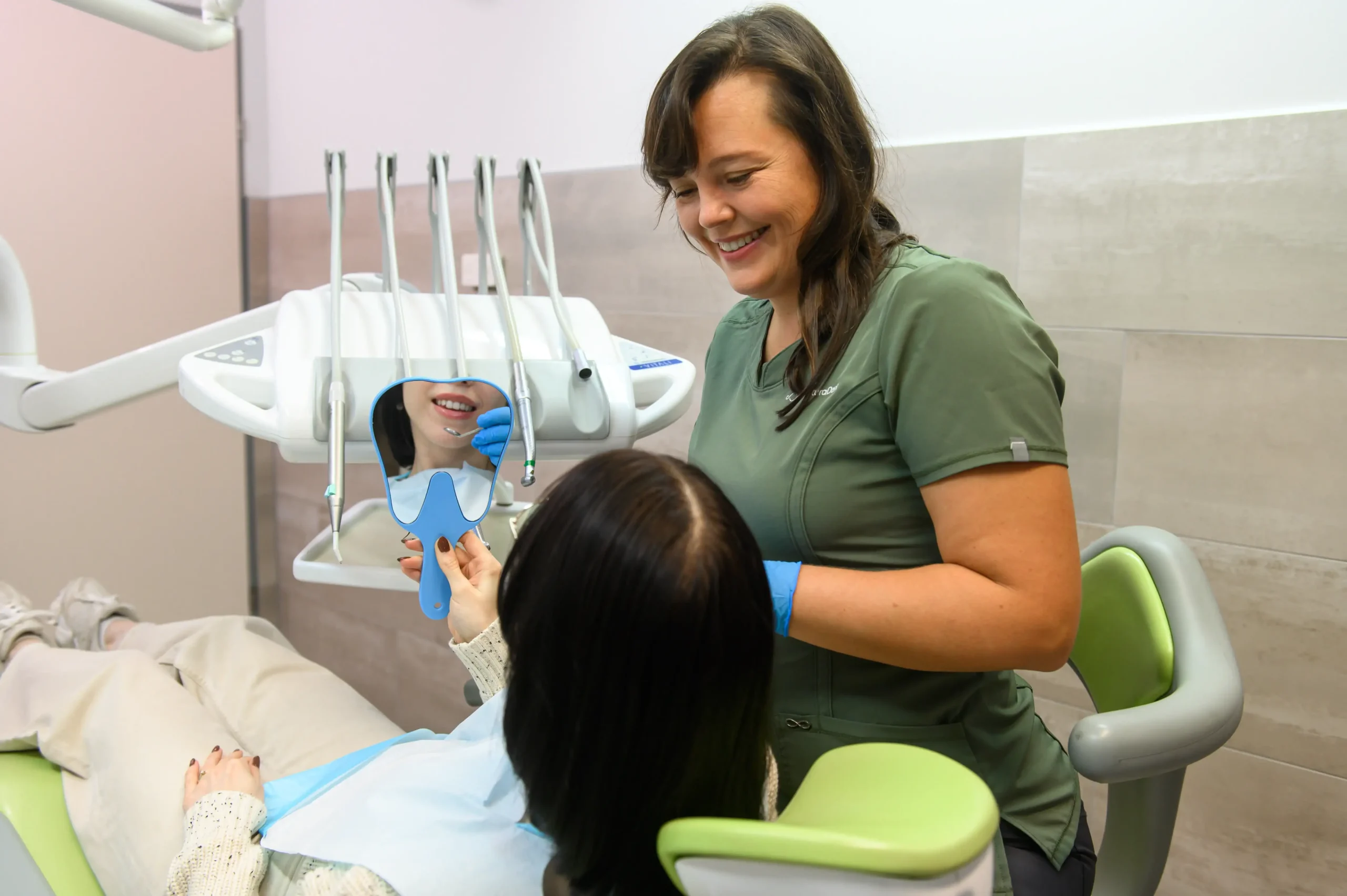
For the examination of the oral cavity, the patient is comfortably seated in the dental chair, opens their mouth wide, and then the dentist inspects the teeth and gums using a dental mirror and probe.
The oral cavity examination includes the following:
-
Tooth examination: The dentist looks for cavities, cracks, wear and tear, tartar deposits, and discolouration, but also checks existing fillings, prostheses, and the patient's correct brushing technique.
-
Gum Examination: Healthy gums are very important for proper oral hygiene, so the condition of the tissues is examined for signs of bleeding, swelling or pocket formation, and great attention is paid to the state of the periodontal tissues and any potential recession.
-
Examination of jaw and chewing functions: An experienced dentist can already tell during the physical examination if there are problems with the jaw joints or if the patient has occlusal disorders, which can often be well treated with targeted intervention, frequently orthodontic treatment.
-
Other examinations: During the oral examination, the dentist checks the tongue, palate, throat, and mucous membranes, which can help in the early detection of oral tumours, for example, and can also monitor salivary gland function as needed.
Surgical examination can often be supplemented by imaging diagnostics
Certain oral lesions are often either not visible to the naked eye or cannot be diagnosed based on the symptoms experienced. In such cases, imaging diagnostics need to be used to uncover hidden problems.
This examination is particularly common during an initial dental consultation, especially if the patient arrives with specific complaints or if it is essential to know the position or condition of a tooth root, for instance, to refine the treatment plan.
In modern dentistry, the following imaging methods can be used to support oral examinations:
-
Intraoral radiograph: Applied when a small area, a few teeth, needs to be examined more closely in the oral cavity, for example, to check the condition of the root tip in case of a painful tooth.
-
Panoramic X-ray: One of the most common imaging methods during an initial dental consultation, which allows for a view of the entire set of teeth, the jawbone, and even the temporomandibular joints. It provides excellent visibility of tooth placement and can also be used to check bone stock and certain abnormalities, for example.
-
3D CB CT: This imaging technique is extremely precise and can produce three-dimensional images of the dentition. It is rarely used during routine consultations, but if a patient seeks dental treatment for implants, surgery or specialised root canal treatment, this diagnostic method is both the most thorough and the most accurate. The the role of imaging prior to root canal treatment Our separate guide provides detailed information.
Development of a treatment plan
Following the examinations, the dentist always summarises the results of the initial dental consultation for the patient, with particular emphasis on both the diagnosed findings and the treatment options.
Following this, it outlines the therapeutic options for each problem, whether it be a simple tooth filling or more extensive procedures such as tooth extraction, root canal treatment, or even implantation.
As patients are active participants in the process, they make decisions about the treatment plan together with the dentist, which must include the order of interventions, their timings, and, of course, the associated costs.
During the consultation, the patient can naturally ask the dentist questions relating to their condition or treatment options.
If there is no problem requiring treatment
If the examinations carried out during the consultation do not reveal any changes requiring intervention, the dentist will conclude with preventative advice, as prevention is of particular importance, especially during the first dental visit.
Preventative advice can cover the following topics:
-
Mastering correct tooth brushing techniques.
-
The use and importance of appropriate interdental cleaning (using dental floss, interdental brushes).
-
The importance of extra fluoride application (fluoride toothpastes and mouthwashes).
-
Lifestyle advice (quitting smoking, reducing sugar intake).
Emergency interventions at the first dental consultation
Rarely, but it can happen that someone presents with acute complaints at their first dental consultation, such as severe toothache, swelling, or severe gingivitis.
In such cases, if the dentist sees no contraindication, treatment can be carried out even at the first appointment, so that the patient's pain and discomfort can be alleviated as soon as possible.
Usually, the following emergency interventions may occur during an initial dental consultation:
-
Temporary dental filling preparation.
-
Commencing medical treatment with an anti-inflammatory purpose.
-
Commencing root canal treatment procedure.
-
Tooth extraction in cases of strong justification.
Frequently asked questions
What Is a Dental Consultation?
A dental consultation can typically be considered an examination of the patient's condition, during which the dentist checks their teeth, identifies any potential abnormalities, and develops a treatment plan. In the absence of complaints, preventive advice is also provided.
Why is the first dental consultation important?
This is mainly because the dentist can assess not only oral health issues at this time but also the patient's general health, which can influence treatment in cases of diabetes or cardiovascular problems.
How long does the first dental consultation take?
A general dental consultation takes 30 minutes. If the patient presents with an issue related to a specific specialty, the consultation may last for 45 minutes.
Is the first dental consultation painful?
The diagnostic procedure is painless, so anaesthesia is not required unless an emergency intervention needs to be performed.
What should we bring to the first dental consultation?
Fundamentally, nothing is required, but if you have previous dental X-rays available, they can be useful, and in the case of chronic illness, a list of medications being taken is also important.
Is it time to book an appointment for the first dental consultation?
Yes, this is essential, it's always important for the initial assessment Appointment booking, so that the doctor has enough time for a thorough examination.
Is an X-ray needed at the first consultation?
Not in all cases, only if the dentist deems it necessary based on the symptoms.
How much does the first dental consultation cost?
The first dental consultation at NaturaDent is available from 15,000 Ft for a comprehensive examination.
How Should You Prepare for Your First Dental Consultation?
The most important thing is to thoroughly clean your teeth before the examination; no other preparation is required for the consultation.
Taking a medical history.
The anamnesis is nothing more than the dentist listening to the patient's complaints, their medical and dental history, their medication habits, and asking related questions.
Can the initial dental consultation be carried out during pregnancy?
Of course, and in fact, due to the negative effects of pregnancy on teeth, it is highly recommended even in the first trimester, although X-rays are only taken in such cases if absolutely necessary.