


Many orthodontic practices in Budapest still stick to traditional methods, such as conventional metal braces. NaturaDent Dentistry, however, represents the future and is committed to invisible orthodontics and Invisalign technology.
This does not, of course, mean that we reject other orthodontic techniques; on the contrary, there are cases where irregularities in the teeth and jaws can only be corrected using traditional methods.
However, when there is a choice, invisible orthodontic treatment offers an equally effective solution, but in a far more predictable, discreet and flexible form, which does not place an undue burden on either children or adults.
So how exactly does orthodontic treatment work in Budapest’s dental practices, what options are available to patients, and what does NaturaDent offer? In this article, we’ve summarised the key points for those about to undergo treatment.
Why is orthodontic treatment important?
Many people regard orthodontic treatment as a procedure required exclusively for children or teenagers, the purpose of which is to correct teeth that have not grown in properly or are crowded.
In fact, however, there is much more to it than that!
- On the one hand, orthodontic treatment may be justified even in adulthood, but it is a fact that it is better to start as early as possible, as a younger body responds more quickly to it.
- On the other hand, teeth that have been moved into the correct position through appropriate orthodontic treatment improve chewing and speech, and help to maintain good oral hygiene.
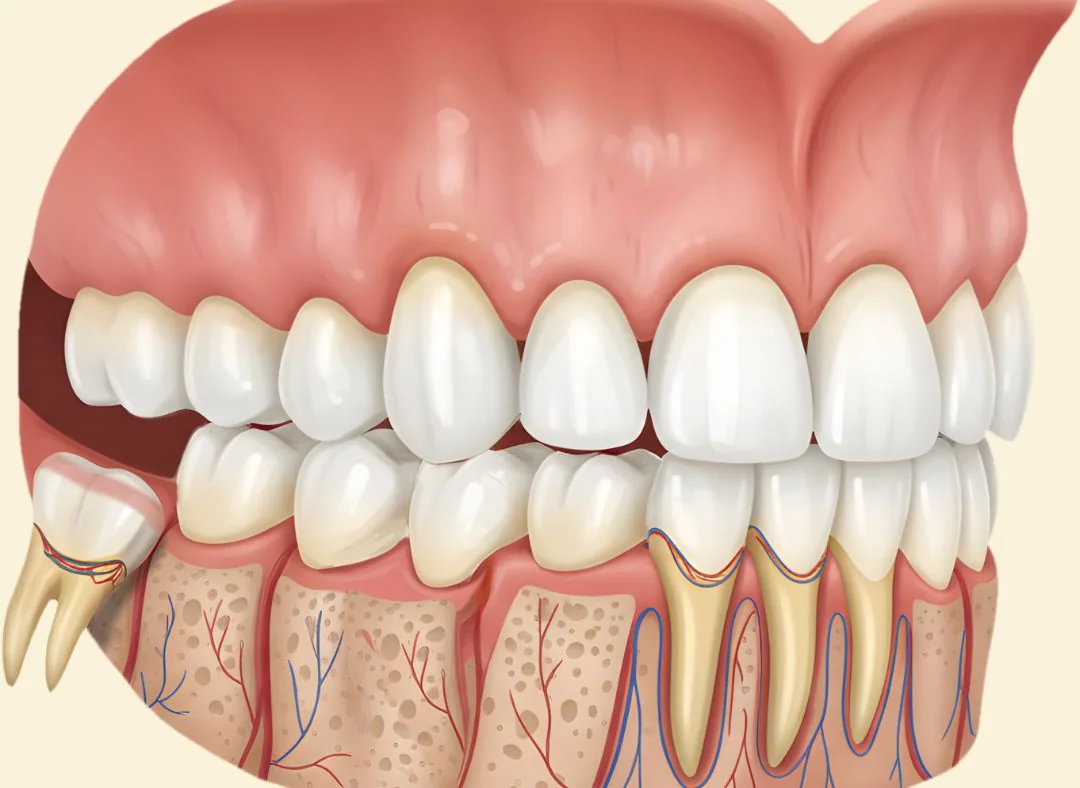
Misaligned teeth make regular cleaning difficult, which can lead to frequent tartar build-up, tooth decay and gum inflammation, whilst malocclusions can cause poor digestion, speech problems and joint problems.
A straight set of teeth therefore not only enhances your smile, but
- makes it easier to clean teeth properly and maintain good oral hygiene;
- improves chewing and speech function;
- promotes the proper functioning of the jaw joints;
- and also boosts the patient’s self-confidence and quality of life.
When is orthodontic treatment needed?
Orthodontic treatment may be necessary even in cases of very slight misalignment. It is very important to note that, although the decision is often made for aesthetic reasons, in the majority of cases there are also functional reasons for the treatment.
Orthodontic treatment is indicated in the following cases:
- crowding (when the teeth press against one another and grow at an angle or in a jumbled manner);
- incorrect bite (e.g. deep bite, crossbite, etc.);
- malocclusions of the jawbones, which can cause severe joint inflammation due to misalignment;
- speech or breathing difficulties resulting from malocclusion;
- gum inflammation that recurs regularly or becomes chronic, caused by teeth that are difficult to clean;
- functional disorders, such as those resulting from teeth grinding or, in children, thumb-sucking and excessive use of a dummy.
In all cases, these problems are identified by a specialist (orthodontist) following a thorough examination and diagnosis.
When is the best time to start orthodontic treatment?
There is no definition or law that specifies when orthodontic treatment must or should begin; however, there are recommendations based on age groups that should be taken into account:
Orthodontic treatment in childhood
There is no doubt that the earlier orthodontic treatment begins, the better the results will be; it is therefore worth starting as early as childhood, if necessary.
Of course, it is important for the child to already have some permanent teeth, but it is not a requirement that all the permanent teeth have come through by then.
In children, the growth and development of the teeth and jawbones help to ensure that more serious malocclusions can be prevented or treated more easily.
Orthodontic treatment during adolescence
Orthodontic treatment is particularly effective for children aged 10–14. At this stage, even complex procedures are possible, as most of the permanent teeth have come through and settled into place.
Or, if orthodontic treatment is needed, it’s simply that the teeth aren’t in the right place or position at the moment, but at this age the teeth can still be moved easily, and the jawbone is still growing, which helps the process along.
Orthodontic treatment for adults
Many people labour under the misconception that orthodontic treatment is no longer possible in adulthood, even though the treatment is not age-dependent. Spectacular results can be achieved in adults too, although the process is often slower and requires more follow-up care.
It is more difficult at this age because both the teeth and gums need to be healthy for the treatment to be successful, but if these conditions are met or can be restored through dental treatment, the desired result can be achieved discreetly, even with invisible braces.
What types of braces are there?
The field of orthodontics has seen enormous advances in recent decades, so patients now have a range of options to choose from.
Of course, there are cases where the discrepancies have become so severe that there is no choice, but in most cases it is still possible, even in adulthood.
At present, braces can be divided into two main categories:
- recorded
- and removable types.
Fixed braces
Fixed braces are those which dentists attach directly to the teeth; they require ongoing adjustments and cannot be removed, but they can be used to treat even the most severe and complex malocclusions effectively.
There are several types of fixed orthodontic appliances recognised and used in modern dentistry:
- Classic metal braces, which everyone is familiar with.
- These are improved versions which use clear or ceramic brackets, making them less conspicuous.
- In addition, in certain cases, metal braces attached to the inner surface of the teeth may also be used; these are also aesthetically pleasing options.
- Then there are self-ligating braces, which use small locking mechanisms to achieve the desired result instead of rubber or metal brackets.
Removable braces
Alongside fixed braces, removable braces are becoming increasingly popular; these are not fixed in place, and certain types only need to be worn by patients from time to time, for example at night.
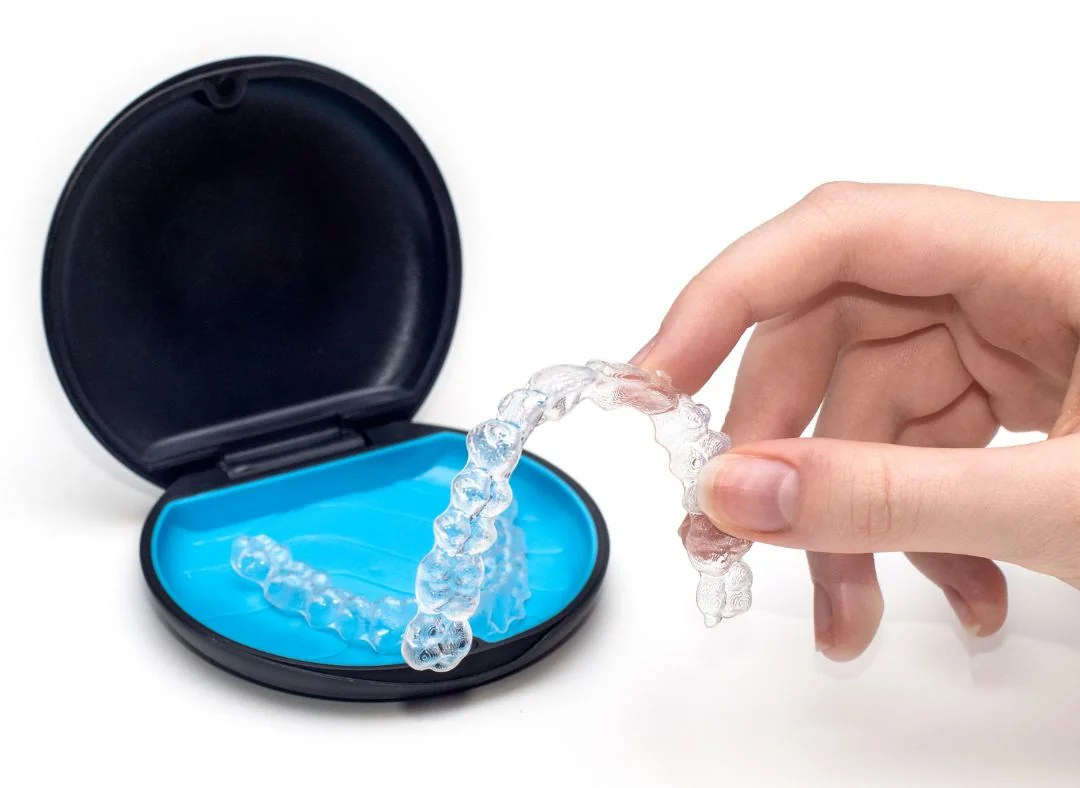
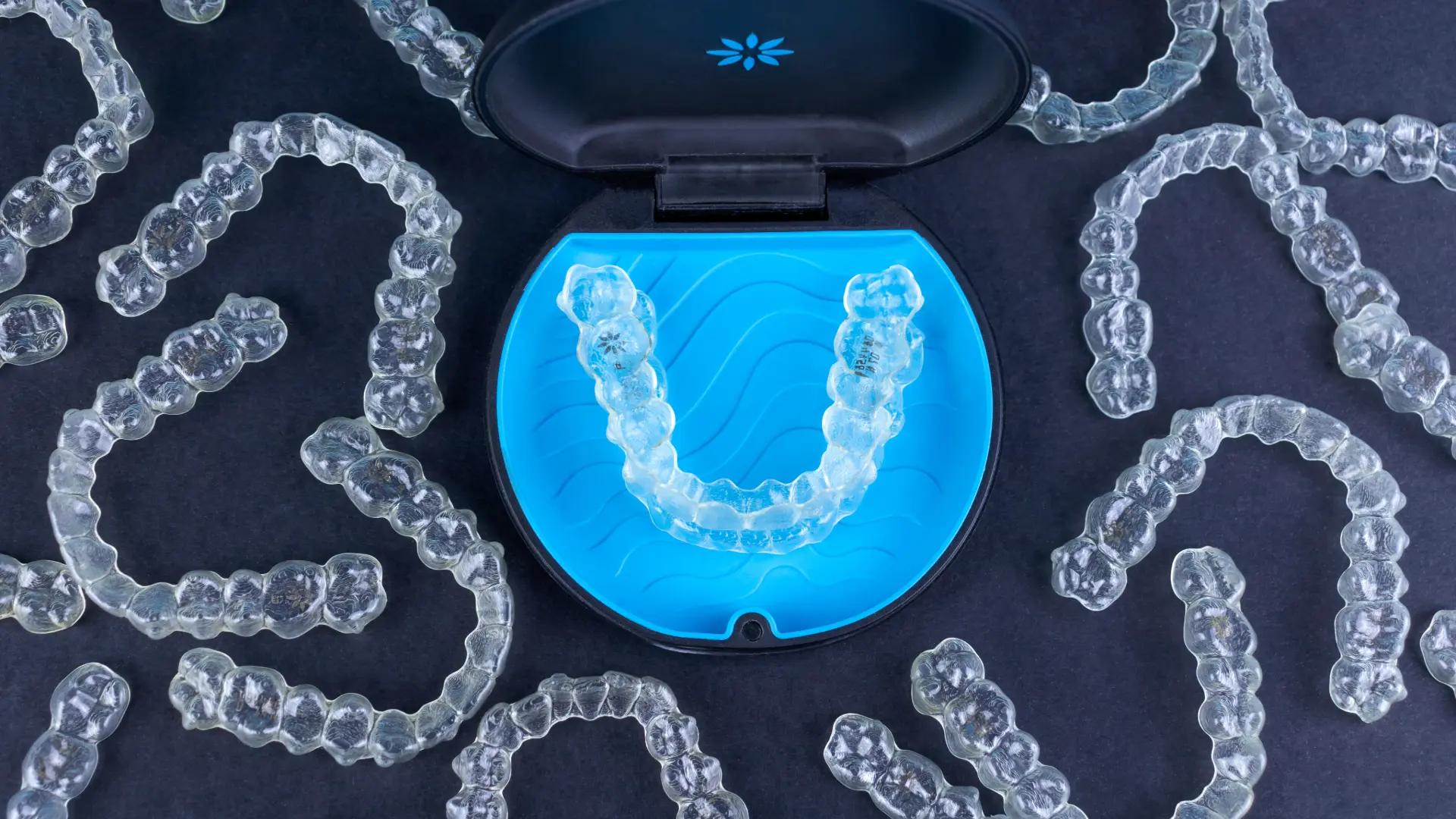
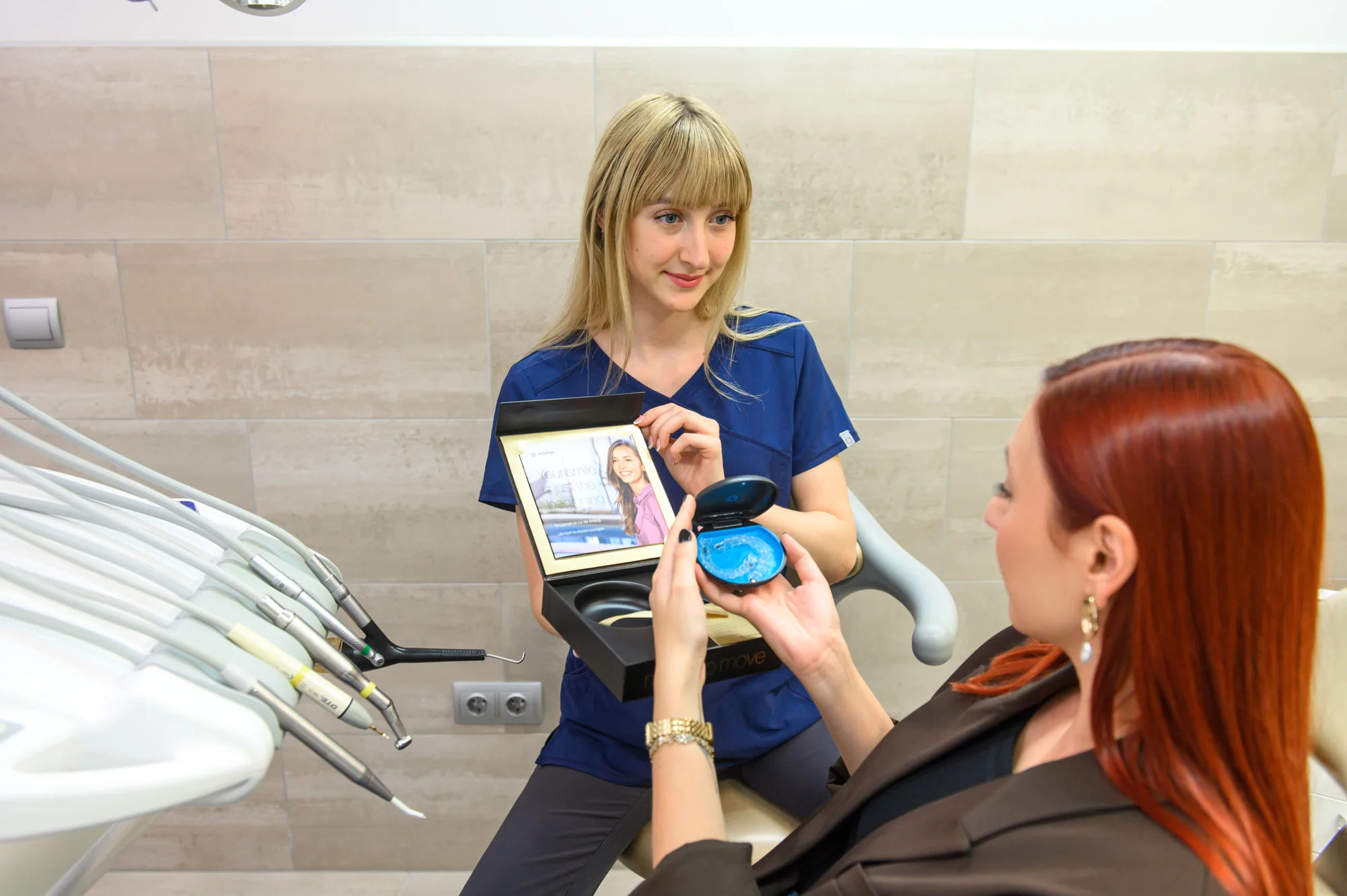
One of the most popular removable orthodontic treatments is the invisible aligner. Whilst there are now many different types available, the most effective and widely recognised is Invisalign, which has helped millions of people around the world.
The Invisalign orthodontics In most cases, it offers a perfect alternative to conventional devices; indeed, it is not only effective but also more convenient, more discreet and provides greater freedom during treatment.
Other removable braces are generally designed to be worn only from time to time, with the aim of making certain early-stage conditions easier to treat.
Invisible orthodontic treatment in Budapest, at the NaturaDent clinic
Orthodontic treatment follows a similar pattern in most clinics in Budapest, but NaturaDent is committed to offering its patients much more and much better in every respect. So how does invisible orthodontic treatment work at our clinic? Let’s take a look step by step:
- Firstly, we examine the patient’s teeth, identify any abnormalities, and check the criteria (healthy teeth and gums) required for orthodontic treatment; if necessary, we carry out any preparatory procedures.
- The first step in orthodontic treatment is to scan the entire set of teeth using a 3D scanner, followed by X-rays and 3D CBCT scans, so that the planning process can begin.
- Based on the results of the examination, we draw up a personalised treatment plan and even create an animation showing the patient what to expect at the end of their orthodontic treatment. The ClinCheck plan shows the stages of tooth movement in detail and can even be used to calculate the number of aligners required and the duration of treatment.
- We send the final plans to Invisalign’s US headquarters, where the custom-made aligners are manufactured from a special biocompatible material.
- Once these have arrived, the first aligners will be fitted under the dentist’s guidance; these can be removed at any time (they must be worn for 20–22 hours a day), and the patient will be informed of the schedule for changing the aligners.
- Regular check-ups are required during treatment, and the final splint serves as a retention splint to ensure that the results achieved are maintained.
Why should you choose NaturaDent if you need Invisalign treatment?
Why should you choose the NaturaDent clinic if you need effective, quick and discreet orthodontic treatment in Budapest? Let’s find out!
- Platinum II Provider accreditation:Our practice is proud to have been awarded Invisalign Platinum II Provider status following a large number of successful orthodontic treatments, so our experience is not just on paper.
- State-of-the-art equipment:We have the most advanced range of equipment in Hungary, so everything is available in-house (including X-rays and 3D CBCT) to ensure that orthodontic treatment can begin as soon as possible.
- Experienced dentists:NaturaDent employs highly qualified dentists with many years of professional experience, so in complex cases, the professional opinions of several specialists can be sought to achieve the best possible outcome.
- Supporting background:We do everything we can to ensure that anyone who chooses us receives not only a positive patient experience but also the right level of support; so if you have any questions or are feeling unsure, we are always here to help.
- Prices available:Despite our premium services, we believe it is important to make our treatments accessible to everyone, so that those who wish to discover the future of dental care will also find what they are looking for with us.
- Flexible booking:Online booking system Thanks to our system, you can quickly and easily select a time slot with just a few clicks, allowing you to attend your dental appointment without having to rearrange your daily schedule.
How much does orthodontic treatment cost?
The cost of orthodontic treatment is always calculated on a case-by-case basis; therefore, there is no fixed amount that can be specified, as every person and every problem to be addressed is different.
The Invisalign orthodontic treatment itself is currently available from 350,000 forints for a single jaw at the NaturaDent clinic, and this may be subject to additional costs (consultation, treatment planning, etc.).
If you’d like to find out more, take a look at our latest our prices, and if you have any questions, please contact us by telephone (+36 1 789 0690) or by email (info@naturadent.hu).
Orthodontics at Budapest’s pioneering dental practice: NaturaDent warmly welcomes its patients!
If you’d like to have straight teeth but would prefer to avoid unsightly metal braces, then Invisalign treatment at NaturaDent – one of Budapest’s most modern and best-equipped dental practices – is the perfect choice for you.
There are no uncomfortable metal brackets or irritation in the mouth; eating is no problem, nor is maintaining proper oral hygiene. This orthodontic treatment represents the future and offers a completely different alternative to traditional methods.
If we’ve sparked your interest, please don’t hesitate to get in touch!
Frequently asked questions
What dental problems warrant orthodontic treatment?
Orthodontic treatment is required for dental problems such as crowding, gaps between the teeth, or deep bite, open bite and crossbite; less commonly, it is also required for jaw-related abnormalities.
At what age is orthodontic treatment recommended?
It depends not so much on age as on the number and condition of the remaining teeth. Treatment is possible from as early as 6 or 7 years of age.
Can orthodontic treatment still be effective in adulthood?
Of course, but provided there are no significant irregularities, discreet methods such as Invisalign invisible braces are recommended at this age.
Is orthodontic treatment painful?
This depends on the patient and the type of appliance. Patients often complain of pain and irritation caused by metal braces; however, this can be avoided with invisible, removable solutions, as these cause no more than a slight sensation of pressure.
How long does orthodontic treatment take?
It depends on the extent of the misalignment that needs to be corrected. In milder cases, the correction takes 3–6 months, whilst patients with extremely severe crowding or misalignment can say goodbye to their problem 3–5 months sooner than if they had opted for traditional orthodontic treatment.
What is a retainer?
A retainer is a removable orthodontic appliance that is typically part of aftercare and helps to prevent the teeth from shifting back into their original positions.
Can orthodontic treatment be carried out during pregnancy?
Generally speaking, yes, but only if the patient is already undergoing treatment, as the planning stage requires imaging techniques that are not recommended for pregnant women.
Why are regular check-ups important when undergoing orthodontic treatment?
This is because moving teeth is only safe under controlled conditions. Furthermore, with traditional braces, the brackets require constant adjustment.
Is it necessary to have a tooth extracted before orthodontic treatment?
In most cases, no, but if the dentist considers that one tooth might affect the movement of the others – and thus the effectiveness of the treatment – then it may be necessary.
How quickly can you see the results of orthodontic treatment?
Most patients usually notice a change after the first month.
What happens if orthodontic treatment is interrupted halfway through?
The teeth shift back into place, but the expected result is not achieved.