


Porcelain, press-ceramic, zirconia or ceramic gold crown.
Which type of crown is suitable for which tooth replacement? What is the procedure for its creation, and how tooth-coloured will the result be? Is the selected dental restoration suitable for making bridges? How does NaturaDent Laser Dentistry contribute to the long-term lifespan of the finished dental restoration? You will find the answers to all your questions in our article.
Porcelain, zirconium oxide, and gold-ceramic crowns and bridges: advantages, properties
I. Material:
Porcelain stoneware
100% metal-free, the material of the crown is pressed under high pressure, resulting in a mechanically extremely resistant crown.
Zirconia ceramic:
Up to 100%, it is metal-free and consists of natural mineral material; thanks to its strong framework, it is also suitable for the fabrication of bridges. It is manufactured using the CAD/CAM process: a computer-aided design and manufacturing process. The zirconium crown is machined from a block of zirconium in three dimensions. This rules out the possibility of human error.
Gold-ceramic porcelain coating:
Its stability is ensured by a gold framework under the porcelain veneer, which is made by electroplating. The plaster cast of the prepared tooth is dipped into a bath containing a gold solution, creating a very thin gold cap (99.8% carat pure gold), which fits precisely onto the tooth.
II. Which tooth is it used for:
Porcelain stoneware
Mainly on the front teeth. Slightly harder than tooth enamel itself. A single crown can be made from it.
Zirconia ceramic:
Also suitable for anterior and masticatory teeth, bridges.
Gold-ceramic porcelain coating:
It is used on both incisors and molars, and is mainly used to create a single crown. It is as strong as a traditional porcelain-fused-to-metal crown.
III. Aesthetics
Porcelain stoneware
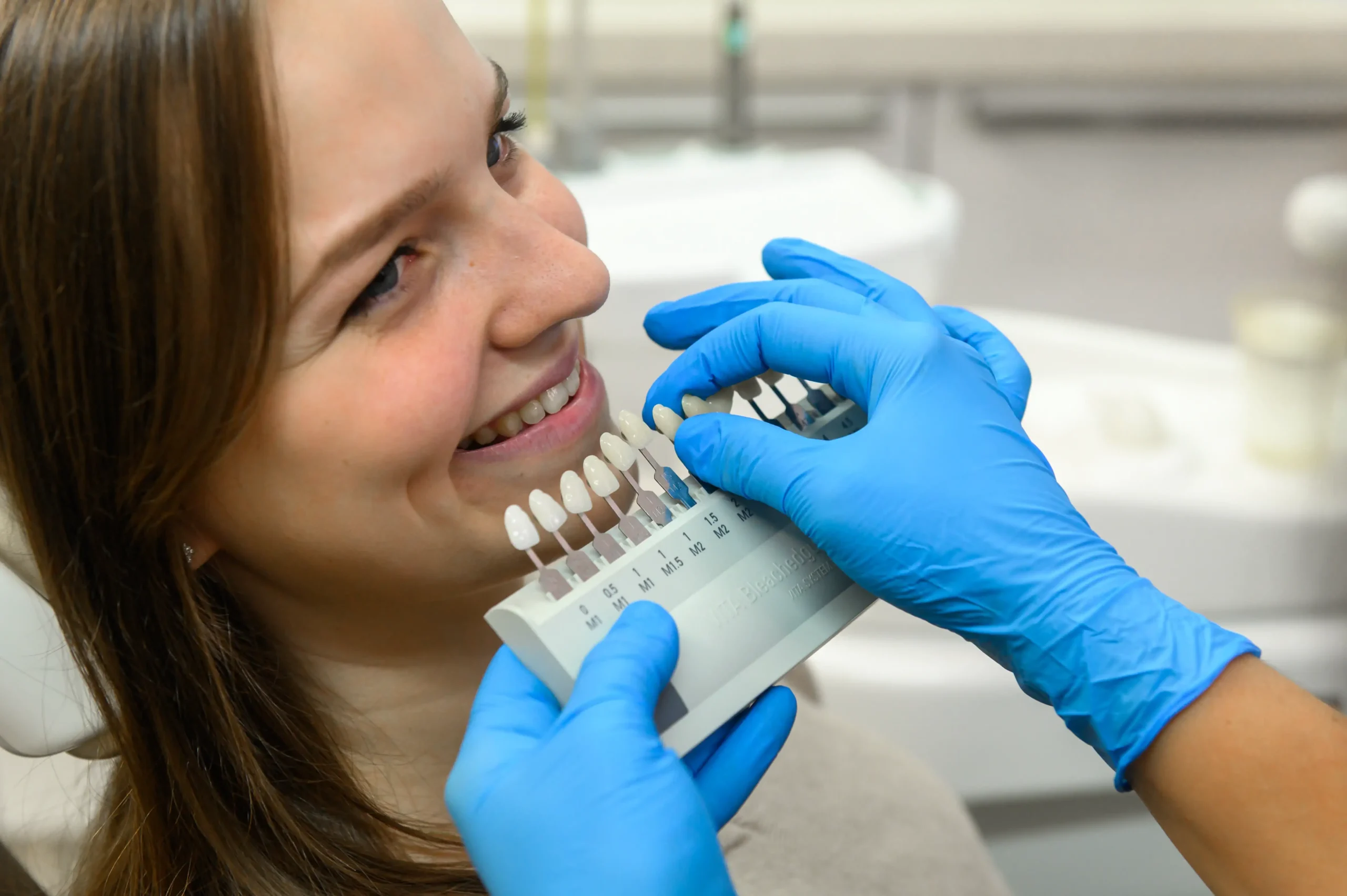
As the entire crown is made of ceramic, it has a very high aesthetic appeal. It helps to perfectly reproduce the colour of natural teeth. Its translucency is similar to that of human teeth.
Zirconia ceramic:
Its translucency makes it significantly more aesthetically pleasing than traditional metal-ceramic crowns, with a colour similar to natural teeth. As it does not contain any metal, no black border is formed around the shoulder of the polished tooth.
Gold-ceramic porcelain coating:
The porcelain veneer and ceramic layer on a gold frame is thicker, giving a superior aesthetic effect. The golden yellow „cap” transmits light rays in the same way as prisms of living enamel, giving a very lifelike effect.
IV. For root canal treated teeth:
Porcelain stoneware
If the root-treated tooth is less discoloured, it can be covered, but if the tooth is severely discoloured, it will need to be whitened before the crown can be fitted.
Zirconia ceramic:
In the case of a less discoloured endodontically treated tooth, it covers the discolouration, but in the case of a heavily discoloured tooth, bleaching is necessary before fitting the crown.
Gold-ceramic porcelain coating:
It can also be used without bleaching in the case of heavily discoloured root-canal treated teeth.
V. Additional benefits:
Porcelain stoneware
Compared with the preparation of conventional crowns, significantly less tooth structure needs to be removed (0.7–1 mm), thereby the risk of damage to the dental pulp is minimal. The pressed ceramic used in the 100% is metal-free, so it has no harmful effects on the body and is biocompatible. It is completely hypoallergenic. It provides a perfect seal and fits the prepared tooth precisely.
To fix the crown, NaturaDent uses laser cavity disinfection to remove any bacteria from the cavity prepared for the crown, thus minimising the chance of decay.
Zirconia ceramic:
It is non-allergenic. It is metal-free and does not cause any adverse reactions. As it does not conduct heat at all, no hypersensitivity to cold or heat occurs, which is characteristic of traditional metal-framed crowns. To fit them, we use laser cavity disinfection at the NaturaDent clinic, which removes any bacteria that may be present from the cavity prepared for the crown, thereby minimising the risk of secondary caries.
Gold-ceramic porcelain coating:
It is gentle on the tooth structure, so the tooth is less likely to be damaged. It is precise and fits the prepared tooth well, so there is less risk of decay developing around the crown. It is durable and does not typically fracture. Due to the shoulder preparation, there is no development of grey gum margins or gum damage, as is the case with traditional metal-ceramic crowns.
Gold it has anti-inflammatory, antibacterial and bacteriostatic effects, thereby preventing bacteria from adhering to the edges of the crown. This reduces the likelihood of caries, gum recession and pocket formation.
It contains no additives, so the number of allergic reactions is minimal. To fit the crown, we use laser cavity disinfection at the NaturaDent clinic, which removes any bacteria that may be present from the cavity prepared for the crown, thereby minimising the risk of secondary caries.
It's essential that you are not left without a tooth while your prosthesis is being prepared: our dentists will always fit the prepared tooth with a dental crown, either in-office or temporary.
You can „crown” your dental health with our interesting, related content:
Metal-free zirconia crown and bridge
Porcelain i.e. pressed ceramic crown
Cleaning and maintenance of the completed crown and bridge