


Dental fillings have undergone tremendous development in the last few decades. Not only have the technologies and materials used reached a much higher level, but the approach to aesthetics has also changed a great deal.
This is particularly true in the case of front tooth fillings, as dentists must not only ensure the functionality of the front teeth, but must also strive for the best possible aesthetic result during treatment.
In a modern dental practice, of course, attention is paid not only to the front teeth but also to the back chewing teeth, ensuring that the dental fillings used provide a confident background for patients in every respect, including their appearance.
Our professional article presents all the options for aesthetically pleasing and durable front tooth fillings!
If you need a filling, an implant or any other dental treatment: NaturaDent Dentistry in Budapest.

Aesthetic composite dental filling
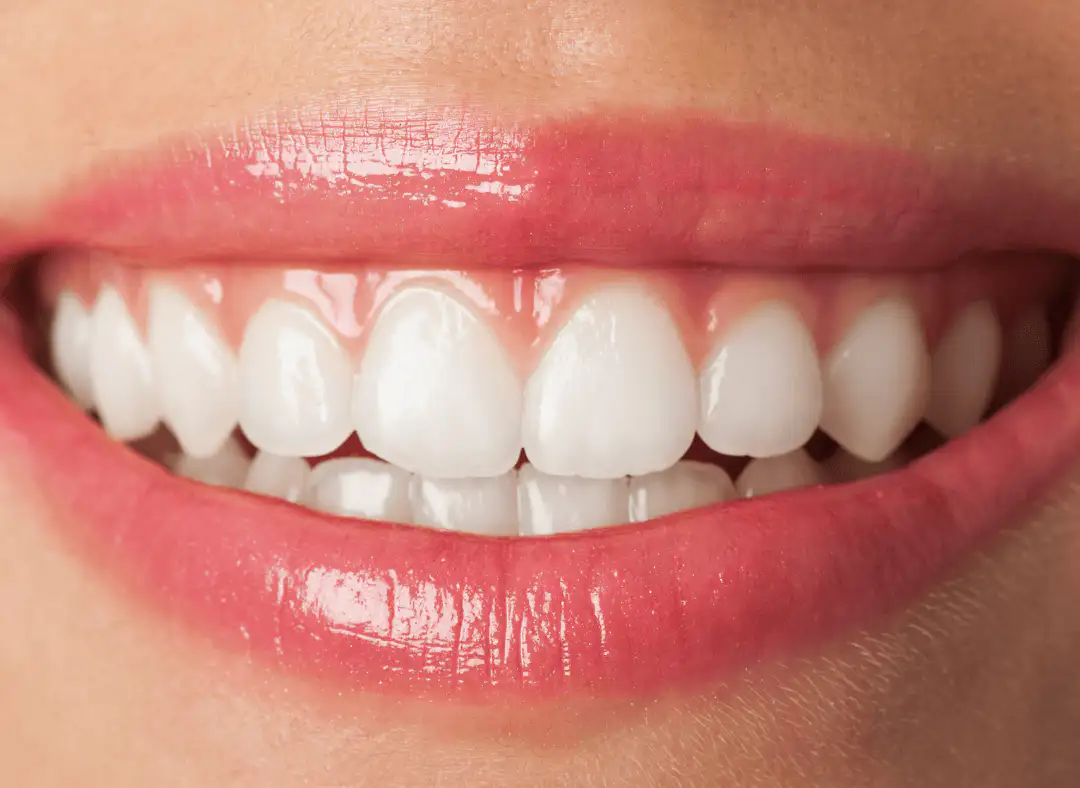
The Aesthete composite A dental filling is one of the most commonly used options when restoration of the front teeth is required. A major advantage of light-curing composite material is that it easily restores the teeth to their original colour.
It can be freely shaped, so restoring the original tooth shape is not a problem. This is particularly important for front tooth fillings, as it allows the filling to blend in completely with its surroundings, as if it were part of the original tooth.
This type of filling consists of synthetic resin, as well as glass and porcelain particles. When freshly applied, it is a soft, easily workable, putty-like filling material that becomes as strong as a traditional tooth under blue light.
If applied to molars for crown restoration, a composite filling can be easily grooved, restoring the original shape of the crown, thus the tooth does not lose its original function.
Composite fillings are ideal:
- tiny holes;
- brown or dark spots;
- previous dislodged fillings and
- In case of broken tooth fragments;
- and also when replacing amalgam fillings.
Aesthetic front filling with laser at NaturaDent
At the NaturaDent clinic, aesthetic front tooth fillings always begin with a thorough examination of the condition, followed by the development of a detailed treatment plan.
One of our practice's specialities is the use of dental lasers during fillings, which offers numerous advantages! Let's look at the steps involved in aesthetic fillings:
- A fruit-flavoured jelly is used to apply an anaesthetic to the mucous membrane around the tooth being treated, in order to prepare the surface for the injection of the anaesthetic.
- Using our thin and short anaesthetic device, we administer an anaesthetic containing articaine, which, compared to lidocaine-based preparations, contains fewer allergens, has a significantly higher efficacy, and is eliminated from the body much faster.
- In the case of a filling replacement, our trained dentist will isolate the treated tooth with a rubber sheet, allowing them to perform the necessary procedure in a saliva and moisture-free environment. This is very beneficial for the patient, as the rubber dam prevents any foreign material used during the tooth preparation and filling from accidentally entering or being swallowed into the oesophagus.
- Cavities and damaged tooth surfaces are precisely removed using a dental laser, without causing micro-cracks.
- Utilising the disinfecting effect of the laser, we eliminate bacteria and other pathogens. Our special dental laser ensures this safely, without damaging healthy tissues, and painlessly.
- Tooth surfaces prepared with a hard tissue laser provide much better adhesion for dental fillings than those prepared solely with a conventional dental drill.
- A light-curing filling material, matched to the colour of the set of teeth, is precisely filled into the cavity in the correct amount, adjusted to the tooth, and then, if necessary, refined.
Inlay filling
Inlay technology is rarely used for front tooth fillings, but as it is a common method in dentistry, it is worth getting to know.
This method can be classified among bonded fillings, the essence of which is fitting a precisely shaped porcelain inlay, prepared by a dental technician, into the cavity in the tooth. It is mainly a good solution for molars when a large piece has broken off from them, or when they have decayed to such an extent that a filling no longer provides sufficient support.
Inlay fillings are also advantageously used for large tooth gaps, even if there is a risk of decay spreading to adjacent teeth.
In terms of functionality, a major advantage of the method is that it offers an extremely stable foundation, and from an aesthetic perspective, it is popular because not only the colour but also the shape of the tooth can be perfectly adapted to the problem.
It doesn't discolour, shrink, fade, and contains no allergenic substances.
Inlay filling
The advantages of onlay fillings are entirely consistent with the properties of the inlay procedure presented above. The difference between the two is that in this case, it is not a smaller porcelain inlay that is placed in the tooth, but a much larger one, potentially covering the entire chewing surface.
This method is necessary when the tooth is significantly damaged, meaning it has suffered such extensive decay or a piece has broken off that it cannot be restored with a smaller filling, but practically the entire surface of the tooth needs to be covered.
Ceramic veneers
Although it cannot be directly classified as a front tooth filling, as it is also a type of aesthetic treatment – which, unlike traditional fillings, can be successfully used on front teeth – it is important to also discuss ceramic veneers.
The direct (shell) This method, also known as restoration, is mainly considered for the restoration of front teeth in cases where a large part of the tooth has worn away, is broken or may be discoloured; however, it is also well suited to the restoration of teeth in unfavourable positions, such as where there are significant gaps between teeth.
Such problems are often treated with a crown, which is a suitable alternative, but in the case of a ceramic veneer, it is not necessary to grind away or remove a larger amount of the tooth to achieve a suitably aesthetic and durable final result.
Naturally, when removing decay or an old, worn filling, more tooth material must be removed, but this is still far less than what is involved when fitting a crown.
The ceramic shell This process generally results in a restoration made of pressed ceramic, matching the colour and shape of the natural tooth, the production of which requires a prior dental impression.
Composite veneers should also be discussed here, which fall much more into the category of front tooth fillings. In such cases, dentists build up the veneer practically layer by layer using a suitable and similarly durable base material from which tooth fillings are also made.
This procedure requires great care and practice, as the colour of the deeper layers must be matched to the dentine, while the upper layers are more closely matched to the enamel. With this method, the composite veneer can be made to look exactly like the surrounding teeth.
Tooth restoration at NaturaDent
If aesthetic dentistry and front tooth filling are concerned, then the tooth restoration, which can be considered one of NaturaDent's specialities, should by no means be omitted. This is because this method is one of the pinnacles of dental procedures in terms of appearance.
As part of this, not only the natural colouring and anatomy of the tooth are the focus, but dentists also ensure that an enamel-identical masterpiece is produced externally.
Every fog restoration is produced using unique layering techniques, which are accompanied by a special shading procedure. Compared to a filling for the front tooth, here the dentists pay attention not only to the main grooves but also to the secondary grooves.
NaturaDent specialists provide this service at a world-class level, ensuring the result creates the impression of masterpieces crafted by the most experienced dental technicians, yet this method involves significantly less loss of tooth material.
This technique is used by the most famous Western and overseas dental clinics for public figures to achieve a perfect smile, so anyone who is particularly demanding about the appearance of their teeth should definitely consider it when choosing cosmetic treatment.
A significant advantage is that, unlike traditional front fillings, it offers a much longer-term solution because it is made using a special material, and there's no compromise in appearance, as the transition between the original tooth and the restoration will not be visible even up close to the naked eye.