



In modern dentistry, minimally damaged teeth can be treated with very effective metal-free fillings, but for larger problems, prosthetics are necessary.
For durability, most dental prosthetics contain some form of metal or metal derivative. They can be effectively used in the majority of patients, but for those with metal allergies, other alternatives must be sought.
In their case, only metal-free dental prosthetics can be used, which are just as durable and aesthetically pleasing as their counterparts. However, during their design, allergy-causing metals are omitted, thus ensuring a problem-free prosthetic in the long term.
What metal allergies exist, what symptoms they can cause, and what can be done if symptoms are experienced years after the implant has been fitted? The following answers these questions!
If you need a metal-free dental prosthesis, please click on the following link:Naturadent Dental Practice in Budapest.
Early and late dental allergies
To understand the justification for metal-free dental restorations more thoroughly, it is essential to start by familiarising ourselves with the types of dental allergies.
Fundamentally, we can distinguish between two types of dental allergies, so there are
- early
- and the later version.
Early dental allergy
Early dental allergy can be spoken of when related reactions occur almost immediately after treatment, already in the healing phase.
It's important to know that in the vast majority of cases, it's not the dental prosthetics that cause the problems, but rather the materials used in the procedure, such as anaesthetics or disinfectants.
In extreme cases, it can naturally occur that someone is so allergic to one of the metals that they experience negative effects within just a day or two.
This is why it is recommended to perform an allergy test before such a dental procedure, which can save us a lot of discomfort in the long run.
Late dental allergy
Late dental allergies are most common in cases where patients show sensitivity to a tooth restoration or an implant.
This is because general metal allergies typically only show their effects months, often years, later, and can cause reactions not only in the immediate vicinity of the procedure or in the oral cavity, but also in other parts of the body.
In these cases, a metal allergy works exactly the same way as when our body shows an allergic reaction to pollen or food.
During this time, the allergen can trigger extreme reactions from the body, either periodically or continuously. With metal-free dentures, all of this can, of course, be avoided!

What Are the Symptoms of a Dental Metal Allergy?
Dental metal allergy can cause very diverse symptoms, as it can cause complaints not only locally but also throughout the body. However, the most common phenomena are the following:
- Appearance of spots on the oral mucosa and tongue;
- redness and inflammation of the palate and the area around a dental prosthesis;
- ulcerous, inflamed lesions;
- oedema in the oral cavity;
- persistent tingling, as well as burning and stinging sensation in the oral cavity;
- a reduced or complete loss of the sense of taste;
- frequent or persistent dry mouth;
- Eczematous rashes appearing around the mouth or on the face.;
- frequent headaches;
- muscle and joint pain;
- Weakness;
- Indigestion.
How Can You Tell If You Have a Metal Allergy?
Metal allergies develop in most cases during childhood, so if someone pays sufficient attention to their body's signals, they can recognise the problem early on.
For example, it is common for people with metal allergies to react negatively to cosmetics, jewellery, spectacle frames, and metals that can come into direct contact with the skin – such as belt buckles, bra clasps, etc.
However, the use of metal-free dental prosthetics cannot be based on observation alone; appropriate allergy tests are always necessary. Currently, two options exist for diagnosing dental metal allergies.
Skin prick test
The essence of the epicutaneous test is that various metals and metallic compounds are applied to the skin surface of the back, then secured with a special patch, and subsequently, changes appearing on the skin are checked and documented multiple times.
With its help, metal allergies can be precisely identified, and the test results aid in making decisions related to dental procedures, such as choosing metal-free prosthetics.
Lymphocyte transformation test
The lymphocyte transformation test, or LTT for short, is based on a blood test. In this test, the patient's blood is examined and tested under laboratory conditions, as the presence of metals in the body increases the production of T-lymphocytes.
If the patient's blood reacts in this way in relation to any metal, a metal allergy can be easily diagnosed.
What non-metal dental restorations are there?
If a completely metal-free dental restoration is required, in modern dentistry we can choose from two main categories, so we can opt for a metal-free zirconia crown or a metal-free ceramic crown.
Metal-free zirconia crown
The zirconmade from Crown It is one of the most popular options amongst metal-free dental restorations. Its greatest advantage is that it is fully biocompatible and tissue-friendly, so it is guaranteed not to cause any allergic reactions.
During its creation, the framework is carved out of a white cubic zirconia block, the design of which offers outstanding accuracy and precision, reason for which it is done with the most modern computer systems and technologies.
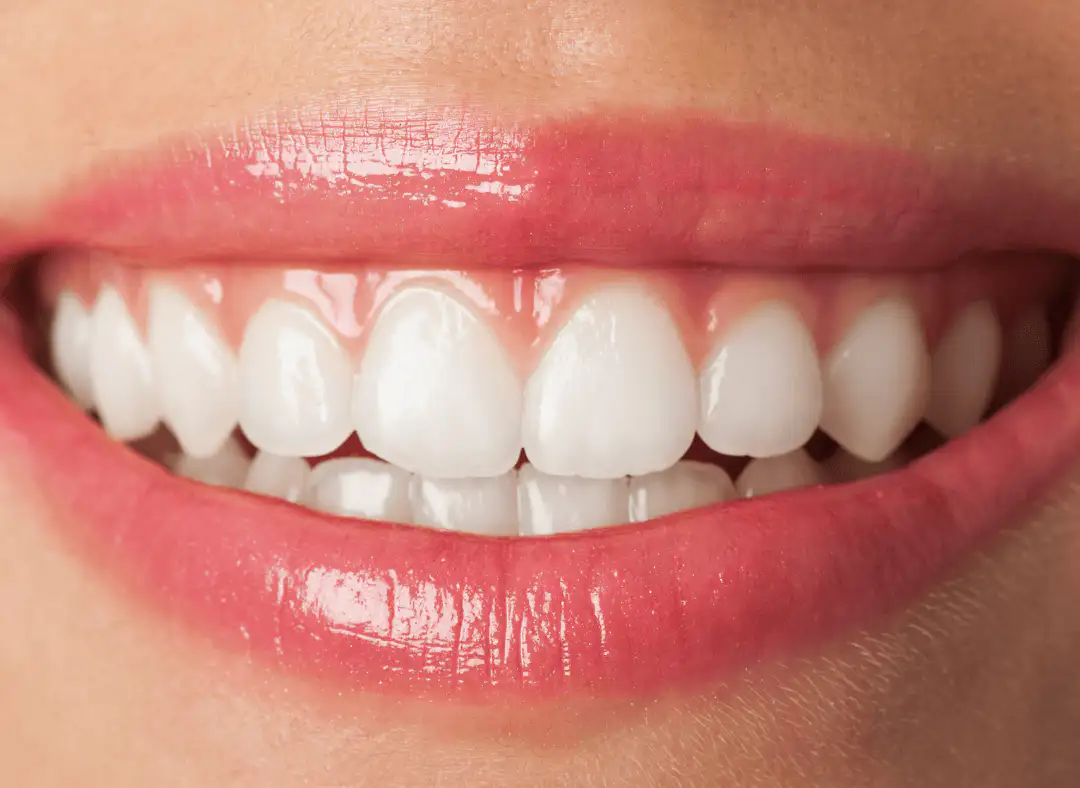
The zirconia crown itself has a natural white shade, fitting perfectly with the other teeth, making it a good choice even when we need to replace front teeth, as it aesthetically blends into the dentition alongside its functionality.
It has excellent acid resistance, which increases its durability in the long term, and can even be excellently used in the presence of periodontitis, as it provides excellent protection for the remaining tooth tissues.
As its durability is topped off with very high flexural strength, it can be an excellent choice for making dental bridges to replace multiple teeth.
Its popularity is well supported by the fact that all elements of metal-free tooth replacement can be made from it, so dental implants are now also made from zirconium.
Metal-free ceramic crown
The ceramics Its use in dentistry has, so to speak, become the norm, although it is usually made with a metal framework. As a result, few people realise that it can also be used to create metal-free dental prostheses.
In this case, the crown is made from lithium disilicate using a special pressing technique, which is very popular because it can provide the appearance of natural enamel in a completely metal-free form.
The reason for this is not only to be found in the material of the dental prosthesis, but also in the fact that there is no separate framework attached to the crown; instead, it is made from a single material at once, allowing light to pass through it in the same way as natural teeth.
It offers a very natural and lifelike effect, so the highest level of aesthetics can be achieved with this dental crown, while of course, we don't have to worry about the durability of the restoration either.
The only disadvantage is that due to the lack of a framework, a dental bridge cannot be made from metal-free ceramics, only a dental crown.

Metal-free dental restoration with implants
As we've already described with the zirconia crown, the science of metal-free prosthetics has now advanced to such an extent that ceramic roots, i.e. implants, are also made in this form.
Zirconia implants offer a 100% metal-free alternative for treating complete tooth loss when dental bridges cannot be fitted. In addition to being metal-free, their significant advantage lies in being a completely biocompatible material that integrates exceptionally well with bone.
However, we would stress that its use is not recommended under normal circumstances, only if the patient is demonstrably allergic to titanium.
The disadvantage of zirconia from an implantological perspective is that it is an extremely brittle and fragile material, making it much more delicate than titanium implants.
What to do if you experience metal allergy after a dental prosthesis?
As in many cases, the detection of metal allergies relies solely on self-reporting, meaning no allergy tests are performed, related reactions may only appear months or years after the dental prosthesis has been fitted.
It can also happen that a metal allergy develops in the body over time. Allergy is a very complex process, and lifestyle, stress, and lack of sleep, which overload the immune system, play a significant role in its appearance.
If a metal allergy develops after a dental prosthesis has been fitted, there is only one solution: to eliminate contact with the sensitising materials as soon as possible, which means the prosthesis must be removed.
Since metal-free dentures already exist today, we naturally don't have to resign ourselves to tooth loss; parallel to the removal of a problematic prosthesis, it is possible to create a metal-free alternative.
Until this is ready, the patient can receive a temporary prosthesis, which can also immediately reduce allergic reactions.
The procedure is similar in cases where a complete dental bridge or an implant causes a metal allergy, but the replacement process can be much more complicated with the latter, as the removal of a titanium implant always requires great care and expertise.