


While dental procedures such as fillings or crowns have become completely accepted in society, there are still many misconceptions circulating among people regarding dental implants.
The reason for this is likely to be found in the fact that an implant, serving as a much more comfortable and natural replacement for dentures, appears much more significant to an outside observer compared to most procedures.
Dental implant surgery is a routine procedure at NaturaDent’s professionally equipped clinic,However, we find that many of our patients have a great many questions and fears regarding this topic.
Therefore, we have now decided to create an article on the main steps of dental implant placement, so that everyone can understand the entire process and can utilise the service more prepared and with greater confidence.
The first steps of dental implant placement
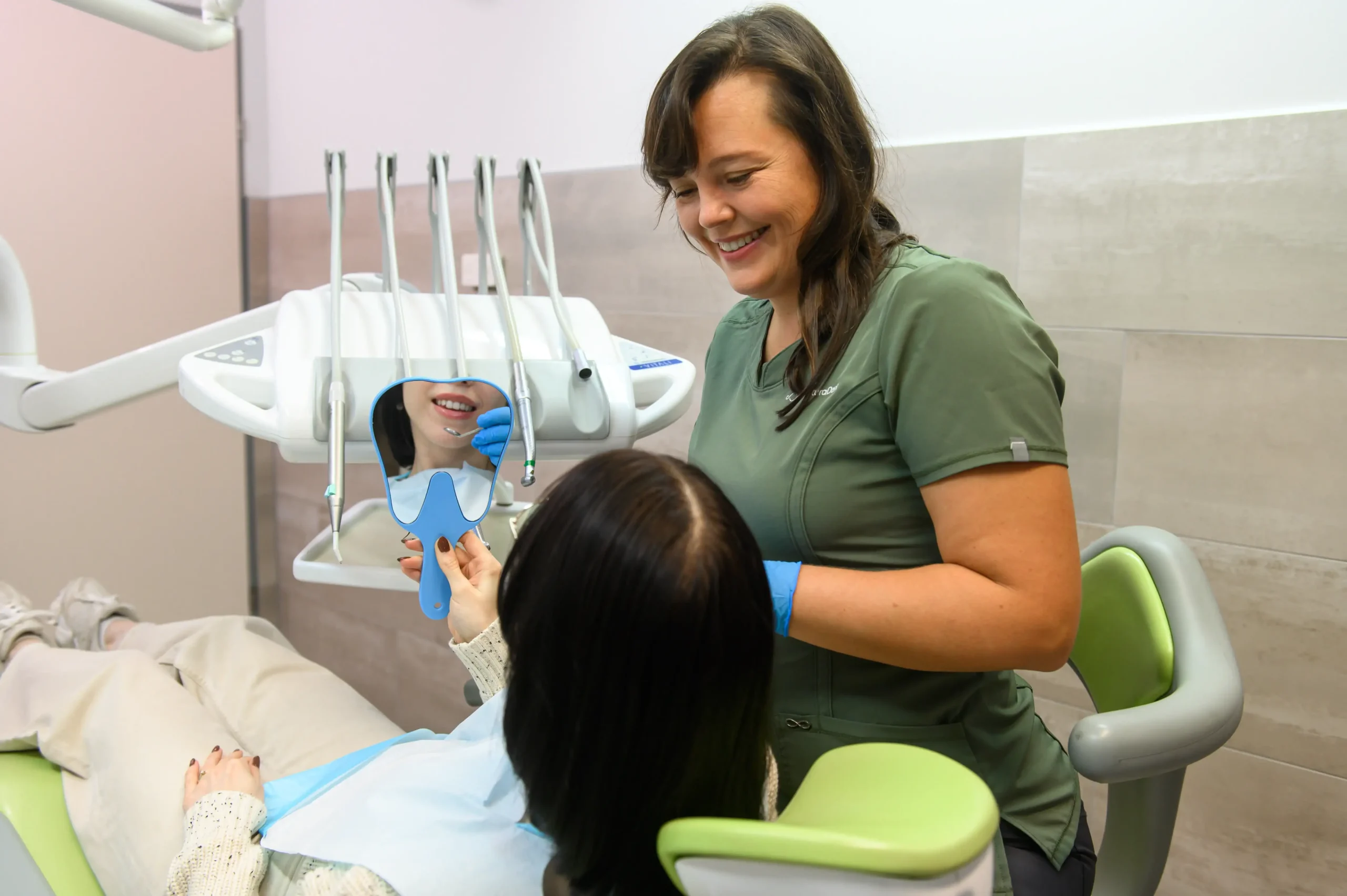
Everything begins with a status assessment, consultation, and the taking of appropriate diagnostic images.
As we wrote in the introduction, a dental implant is indeed a more serious dental procedure, which is accompanied by correspondingly significant preparations. This is because it is essential for the dentist to be aware of the condition of the patient's teeth.
It is important, for example, where the future implant will be placed, and whether the anatomical conditions allow for the procedure. During the consultation, those who arrive can ask questions freely, so they receive precise information about each procedure and step.
At this time, the assessment typically involves a thorough dental examination, during which the prospective patient explains what they would like done. Following the examination, the dentist will then outline the options available.
Dental implant surgery is preceded by careful planning
A dental implant cannot be placed without a prior assessment. A 3D CBCT scan (three-dimensional cone-beam computed tomography scan) is always required to begin the planning process.
This is significant because the dentist needs to be able to see the medium for the future implant, the quality and quantity of the jawbone, and the available space, as this significantly influences the subsequent steps.
Digitally designed tooth implant with the Smart Guide system
If the jawbone is sufficiently strong, the first step is to take a 3D scan of the patient’s teeth. Based on this, a Naturadent dentist digitally plans the precise position of the dental implant within the bone. To do this, they use the very latest Smart Guide 3D technology.
In the digital space, the Smart Guide surgical template is designed, enabling the insertion of dental implants to be completed in a shorter time, with pinpoint accuracy, and with almost 100%percent precision. This implant template completely minimises the possibility of error during surgery, while at the same time the procedure is minimally invasive, less painful, and recovery is also faster.
A Smart Guide guided template implantology is the pinnacle of dental implantation, an ideal choice for you if you are concerned about the risks of the procedure and want a guaranteed precise tooth position, the location of which has been designed to suit the characteristics of your jaw.
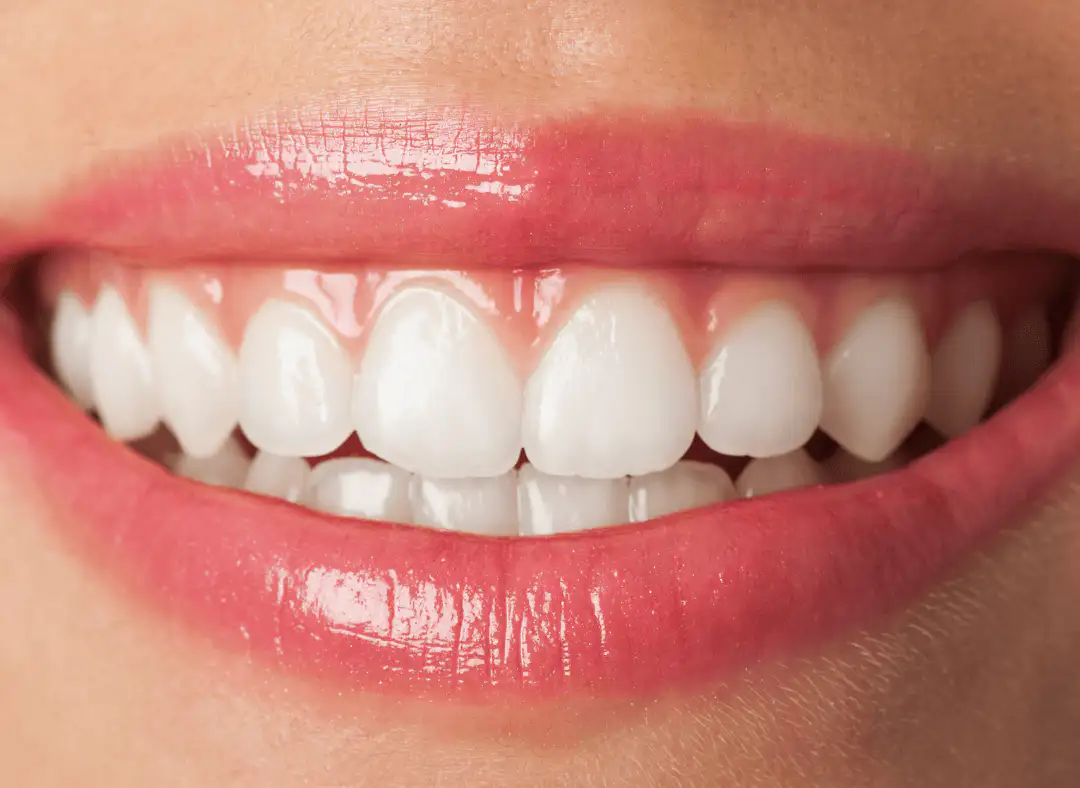
The result is a stable and lifelong replacement that will fit your teeth and smile.
Tooth implant placement
The next step of the implantation is the placement of the dental implant screw, which will serve as the foundation for the future prosthetic tooth. Many people fear this the most, even though in reality, at Naturadent dental practice, it is a routine minor surgical procedure performed under local anaesthesia, from which the patient typically feels nothing.
The process begins with opening the gum, and subsequently, using a Smart Template and special mechanical and manual instruments, the location for the screw is created in the jawbone. The screw is then placed into this so-called bone nest, the upper part of which is then sealed by a special fitting, or abutment screw, until the next work stage.
The flap of gum that has been opened must naturally be stitched up in order for the treated area to heal more neatly and quickly. During the process, multiple implants can be placed simultaneously based on what has been planned on the implant template. The completely painless routine surgery takes approximately 1 hour.

After the healing period has passed, we check the bone integration of the implant with a follow-up CT scan to see if the screw is ready for loading, meaning we can place a dental crown on it. If it is, we make a small incision in the gum using a laser, and then remove the healing screw that we used to seal the implant during surgery. Following this, we place an abutment into the implant.
The connection between a dental implant and a crown
The dental implant and the crown are connected by an abutment, the main function of which is to raise the crown out of the bone. As a result, the gum takes on a shape that matches the crown, thus achieving a much more natural-looking result with the restoration. From this point onwards, there is no direct contact with the bone, which significantly reduces the risk of peri-implantitis – also known as inflammation around the implant. We then wait two weeks for the small incisions to heal completely, after which the fabrication of the dental crown can begin.
Impression taking and dental prosthesis fabrication
After this, the most striking steps of the dental implant placement can take place. In the dental laboratory, the restoration that best matches the teeth will be made, which can be a simple crown, a complete bridge, or even a removable solution.
In all cases, this is determined by the patient's characteristics, needs, and the condition of their remaining dentition. For a full set of teeth, for example, typically only a fixed bridge or a removable prosthesis is an option.
Previously, using the scanner familiar from template creation, we take a digital impression of the teeth and implant, which is then sent directly to the technician online. The work is completed in roughly a week. As the final step, we place the crown, which we secure with a screw that passes through it, and seal the top with a small amount of liquid composite.
The future restoration must not only be aesthetically pleasing, meaning the patient must be satisfied with its appearance, but the dentist also checks the precise fit, sizing, and so on.
Before the dental technicians finalise the teeth, there is still a need for trial fittings when they are in a semi-finished state. Optimally, a single occasion is sufficient, but it is very important to strive for thoroughness at this stage so that the future dental implant fits as precisely as possible.
Post-production is often required
Despite a precise approach and trials, it often happens that a completed dental implant needs to be adjusted because, in practice, the patient experiences discomfort or has difficulty chewing.
Minor fine-tuning naturally doesn't pose a problem, as the goal is for the implanted prosthesis to cause no inconvenience or discomfort in the long run.

The aftercare of a tooth implant
In the case of a dental implant, full healing already occurs during the treatments, as the final restoration can only be placed once the implant and the associated gum area have healed properly.
Following this, a check-up is recommended every 3-6 months without complaint, during which dentists check the patient's oral hygiene and provide useful advice as needed on areas for improvement.
Many are under the misconception that because a dental implant isn't a real tooth, it doesn't need to be brushed. However, we brush our teeth not only to prevent decay but also to maintain proper oral hygiene, the neglect of which can lead to serious health problems.
Gum disease can negatively affect an implant too, which is why we must take care of cleaning these inserted prostheses just as we would real teeth.
Preventative check-ups are also necessary because, in such cases, an expert eye can detect changes that have not yet caused any complaints. Particularly after implantation, for example, gum inflammation can occur, which is easy to treat in its early stages, but later can lead to the rejection of the implant.
At the Naturadent clinic, templated dental implantology designed with Smart Guide technology is performed by two implantologists:
Dr Márta Fülöp Papp MSc MSc MSc. an implantologist who completed his MSc in Germany in the fields of implantology, oral surgery, laser dentistry and periodontology, as well as Dr Amirhossein Golkhorshidi MSc. who is also a dentist with a master’s degree in implantology.
Please feel free to contact us with your dental implant query; our dentists will be happy to assist you.