


There are many ways to replace missing teeth known in modern dentistry. While previously for decades only partial or complete dentures, or crowns, offered a solution in such cases, today the popularity of dental implants is also undeniable.
The reason for this is primarily that this modern solution can reproduce the properties of real teeth without compromise. No single tooth restoration method has been able to do this before!
The dental implant placement It is now considered a routine procedure in a modern dental practice. Nevertheless, given the materials used and the quality of the work involved, the location where the procedure is carried out is a factor that cannot be overlooked.
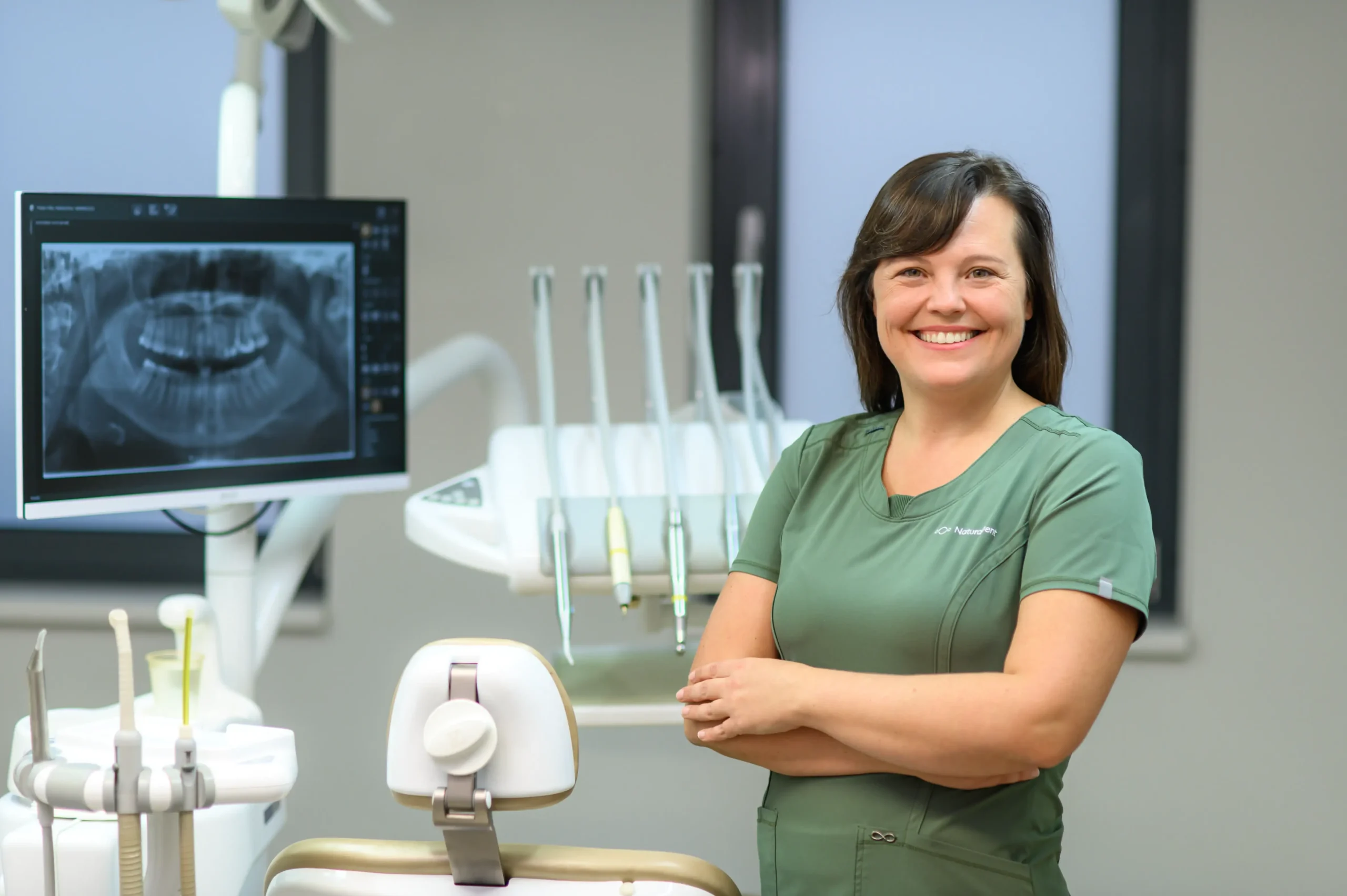
At NaturaDent laser dentistry, alongside state-of-the-art equipment, implantologists work who can be considered true experts in this field, possessing vast theoretical and practical experience.
Dr. Fülöp Papp Márta M.Sc M.Sc M.Sc., NaturaDent's lead dentist and implantologist, was the first practicing dentist in Hungary to complete the M.Sc. Lasers in Dentistry master's programme in Aachen and is currently conducting several laser research projects in the field of implantology, possessing unique expertise in Hungary. She obtained her master's qualification in implantology and dental surgery (M.Sc. Implantology and Dental Surgery) in Münster, Germany.
What exactly do we call a dental implant and what are its advantages? These are very important questions before tooth replacement, so we have carefully answered everything below!
What do we call a dental implant?
There are many misconceptions circulating among people regarding dental implants. Many confuse them with crowns and bridges, even though this method is characterised by a completely different technological background.
Implants can be considered when one or more teeth are completely missing and need to be replaced. Therefore, it is not a case of a crown being fitted over an existing tooth root.
The background of this modern procedure is an artificial root system implanted into the jawbone. It is typically made of medical titanium, which is implanted into the bone during a minor surgical procedure, completely painlessly.
The future crown will later – after healing and bone remodelling – be attached to this implant, providing the same load-bearing capacity as real teeth, while also not disappointing in terms of aesthetics.
The benefits of dental implants
Now that we've clarified the concept of dental implants, let's look at the most important advantages that support this particular tooth replacement technique!
Stable background
Regarding implants, the most important advantage we should highlight is that, among tooth replacement methods, they provide the most stable foundation. The artificial root, made of strong metal, becomes fully integrated and fuses with the jawbone.
This can provide as robust, if not more robust, a foundation for the future crown as natural tooth roots. Once sufficiently integrated and healed, patients regain their full chewing ability.
A properly placed implant provides an extremely stable foundation, and allows it to be loaded just like natural teeth.
Enduring solution
Regarding the dental implants placed by NaturaDent, not only the stable background but also the durability is worth highlighting.
With our vast professional knowledge, meticulous planning process, and modern tools, we ensure that our patients receive optimal service from their implanted prosthetics for many decades, ideally for the rest of their lives.
A properly executed dental prosthesis should provide a suitable foundation for a minimum of 50-60 years, without causing any functional issues and while maintaining a natural appearance. In addition to durability, this significantly contributes to an improved quality of life.

Natural appearance
In modern dentistry, aesthetic considerations are also given particular attention. Dental implants are no exception to this. The artificial roots implanted in the gums normally remain completely unnoticeable, and dentists proceed very carefully with the design of the crown.
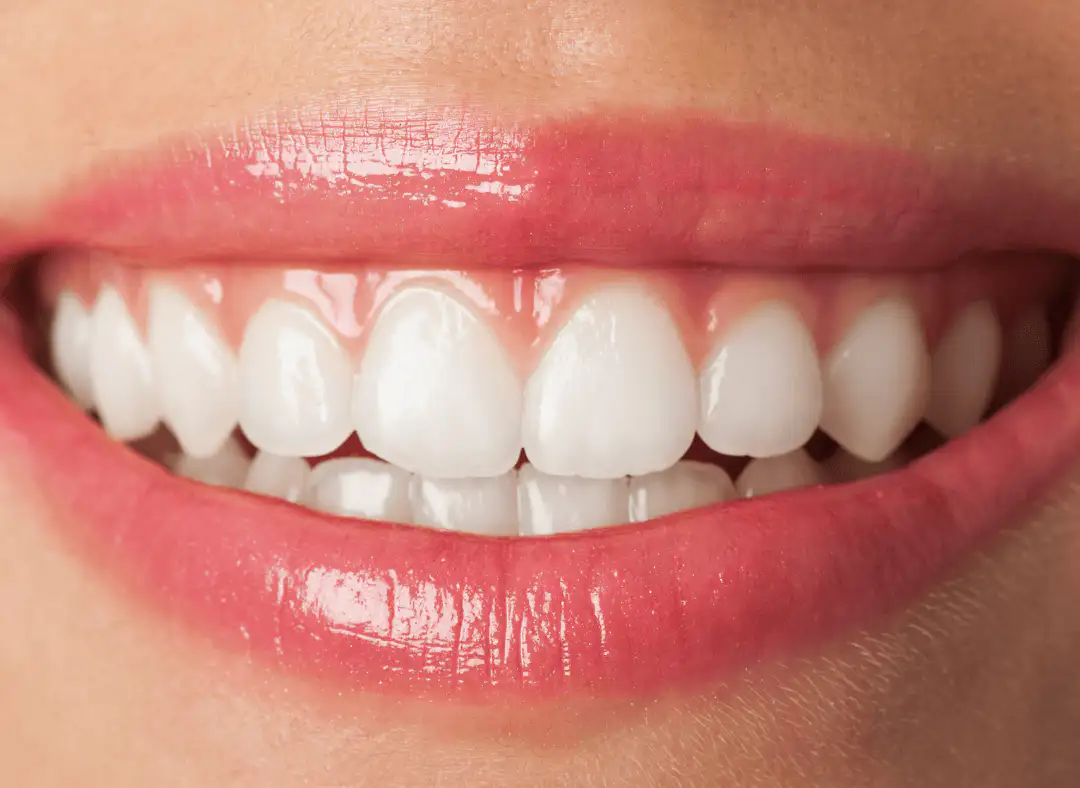
The aim is to achieve the most natural overall effect in terms of shape, size, and colour. Accordingly, the implant will be in perfect harmony with the other teeth in this regard, even if they are just simple molars.
Naturalness is particularly important when we talk about implanting teeth that are visible when smiling or speaking, so their integration into the smile is essential.
Can also be used in cases of constipation
If someone wishes to have an implant in place of a long-missing tooth, they must account for the weakness of the jawbone. The latter can, of course, also be an anatomical peculiarity, so the implantologist checks this in every case before the procedure.
If bone deficiency is suspected, it is still possible to place a dental implant, but the process will be longer. In such cases, bone grafting must be performed to start with so that the artificial root can have a sufficiently stable foundation.
There are now several types of bone grafting known. Which one is recommended for use should always be decided by an implantologist – in agreement with the patient, of course.
Comfort does not have to be sacrificed either.
A common misconception regarding dental prosthetics is that they are very uncomfortable. This is because, for some reason, people still vividly recall ill-fitting prosthetics from earlier times, typically with crowns that were left too high, too low, or too wide, or perhaps the nightmarish image of removable dentures.
Such things are unacceptable in modern dentistry, so an implant of adequate quality not only looks like a natural tooth, but also doesn't require compromise in terms of comfort.
This is because a dental implant cannot move and, due to precise planning, its size fits perfectly with the other teeth. Of course, some getting used to is required after the crown is placed, but there's no need to worry about comfort.
One or more missing teeth can also be replaced
As we have described several times above, there are many myths circulating among people about dental implants, such as how many teeth can be successfully replaced with them.
There are no restrictions in this area. If the jawbone permits, then one or even multiple missing teeth can be replaced using it.
If multiple teeth were to be replaced this way at once, it should be known that there is no solution similar to dentures or bridges. With this technology, each and every tooth must be supported by a separate implant to achieve the desired effect and aesthetics.
There is no need to grind down the adjacent teeth.
For many years, dental bridges have been an effective solution for missing teeth to replace it. The only condition for this was that the adjacent teeth should be intact and healthy.
Although it is still possible to create bridges nowadays, it is much more advantageous to use implants, as this does not require the adjacent teeth to be ground down.
In the case of bridges, the adjacent teeth provide support for the crown, which extends longitudinally. This can be particularly inconvenient if healthy teeth need to be ground down to achieve the desired result.
However, when a dental implant is placed, the surrounding teeth are not damaged at all.
Prevents jawbone atrophy
It is important to know about the jawbone that it is typically so strong because it is subjected to constant stress from regular biting and chewing, which results in continuous ossification.
However, if a tooth is extracted, this load is removed from its location, so natural ossification does not occur, and the bone structure gradually weakens. This can later lead to unpleasant surprises when an implant is placed.
However, if a dental implant is placed in the jaw shortly after tooth extraction, the load is returned quickly, thus restarting the natural bone ossification process, thereby preventing bone loss.
It restores people's confidence.
Human self-confidence is a complex equation with many factors, but according to experience, uninhibited laughter and smiling, along with beautiful teeth, contribute significantly to ensuring that this self-confidence does not suffer.
Someone who is embarrassed about missing teeth typically cannot form human relationships like others, constantly fearing rejection, surprised glances, or what people think of them.
This is a significant issue in terms of self-confidence, so implantation not only has a very beneficial effect on our health and appearance, but it also demonstrably helps in building and rebuilding self-confidence.
It can also stabilise a removable denture.
Alongside the many positives, a definite advantage of dental implants is their crucial role in stabilising even a removable denture.
Removable bridges and dentures, even when using the most modern technologies, have questionable stability. In this regard, they most often do not come close to the properties of natural teeth.
However, even these removable solutions can be precisely stabilised with the help of implants. In such cases, more implants need to be placed to achieve the goal, but with their help, removable dentures can be made sufficiently stable and durable.
What are the disadvantages of dental implants?
Now that we have considered the advantages, in the interest of objectivity, we must also highlight the potential disadvantages of dental implants. Fortunately, in this regard, we can speak of very minor drawbacks.
One such factor is cost. Dental implants are more expensive than conventional bridges; however, in return, we receive a much more durable, aesthetically pleasing, and stable solution for our money.
The other is the duration of the implantation. This type of dental prosthesis can indeed take several months from the initial stages to the final ones, as appropriate healing times must be allowed.
This is also a factor that holds many people back from this type of intervention.
However, it is important to note that if implantation is performed without adequate professional background and preparation, you may experience many more negative outcomes.
If you want to be sure, choose NaturaDent, as Dr. Márta Fülöp Papp M.Sc. M.Sc. M.Sc., our leading implantologist, has vast experience in the field. She is currently conducting several research projects and even publishes articles on prosthetics and dental implants in significant foreign dental journals.