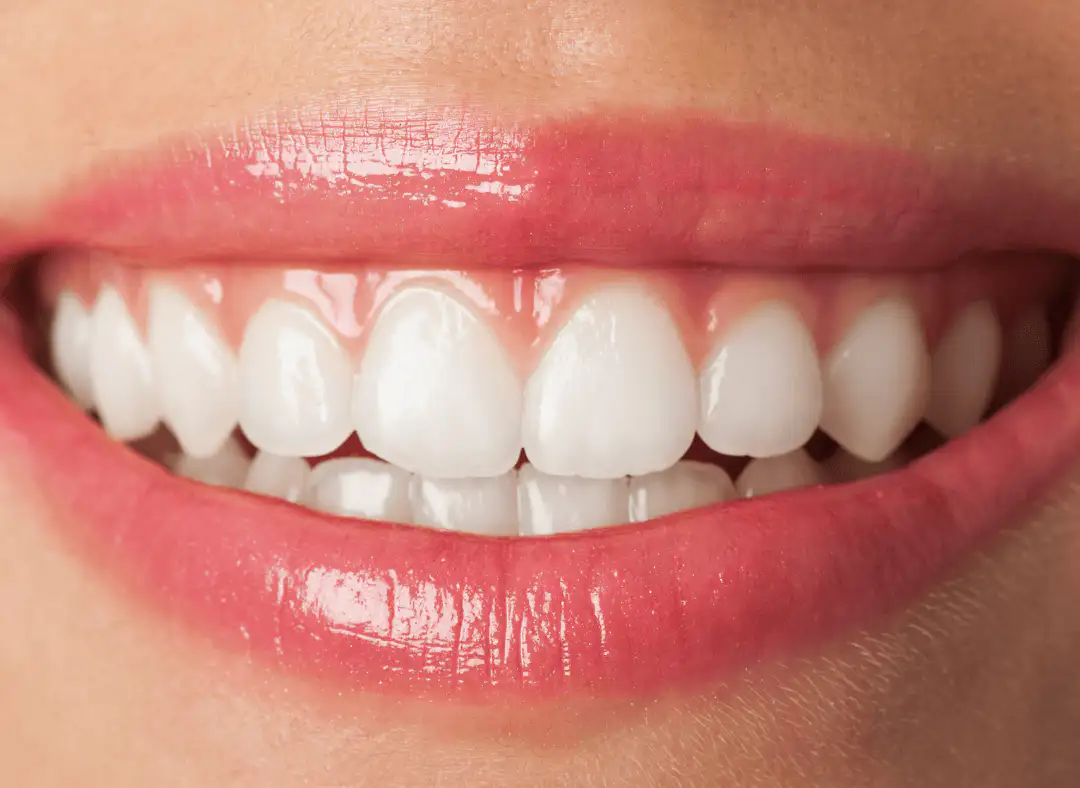



Malocclusion is a very common dental disorder. It is easily recognisable as it is aesthetically very unpleasing, as the teeth grow in a completely irregular way.
Congestion has degrees. Sometimes the entire upper and lower dentition may be affected, but sometimes only one or two teeth may show irregular growth, which in most cases is reflected in their visible misalignment.
Although it is a common disorder, in many cases people do not pay attention to it, even though it is not only aesthetically unpleasing, but also has a number of other negative effects.
In the vast majority of cases, treatment is strongly recommended even in adulthood, as discreet solutions such as the invisible one are now available Braces, which enables us to achieve a straight set of teeth without having to make any compromises.
What are the risks associated with crowded teeth, and why is this a good solution?Invisalign invisible braces, also available at Naturadent? In our article, we set out to find the answers to these questions!
What causes tooth decay?
There are several factors that can contribute to the development of malocclusion. Whichever it is, without proper orthodontic treatment, this type of deformity cannot be corrected. But let's see what are the causes of malocclusion?
Genetics and the resulting lack of space
One of the most common causes of tooth decay is a simple lack of space. In this case, it is simple genetics, because what happens is that during development the arch of the lower or upper jawbone is smaller than the size of the teeth.
The larger teeth therefore have to share a smaller jaw, which creates the characteristics of crowding. The reason is that the teeth seek their proper position, but since they cannot move longitudinally, they slide side by side.
This is usually caused by hereditary genetic factors, so if one parent has a narrow jawbone and the other has larger teeth, for example, and the child inherits both, the result will be malocclusion, which needs to be corrected by orthodontics.
The wisdom tooth
There are countless case histories in dentistry of teeth that developed beautifully during childhood but, in adolescence or young adulthood, as an adult An impacted wisdom tooth can completely ruin it.
Many patients experience problems with wisdom teeth. They usually emerge too late, try to fit into the already developed dentition and, often lacking space, crowding out the entire dentition.
As a result, existing teeth are displaced, displacing them out of their place, creating the classic pathology of congestion. In this case, the wisdom tooth typically has to be removed and the dentition restored with targeted orthodontic treatment.
Bad habits
It may come as a surprise to many people, but bad habits, especially in childhood, can very often lead to cavities, which is something parents in particular should be aware of.
The use of dummies, thumb-sucking, or mouth-breathing, for example, have a very negative effect on tooth development. Moreover, based on observations, this malformation is also more common in children who lose their milk teeth too early.
It is not a bad habit, but the period when deciduous teeth and permanent teeth alternate should be highlighted in relation to childhood tooth development.
If the latter are much wider, and there is not enough space or the jawbone does not grow enough, this can also cause so-called malocclusion.
In all cases, orthodontic treatment is necessary, either by waiting for the remaining teeth to erupt or by encouraging the patient to stop bad habits if the problem is detected earlier.
Why does tooth crowding need to be treated?
A crowded dentition can be very dangerous. It is best to start treatment in childhood, but it is also possible to solve the problem in adulthood - even with discreet methods such as invisible braces.
But now let's see why it is necessary to treat tooth decay in the first place.
Congestion makes it impossible to maintain good oral hygiene
In many cases, overcrowded teeth can lead directly to tooth loss. The reason for this is primarily that even cleaning perfectly aligned teeth can often be difficult, and for crowded, misaligned, and hard-to-reach teeth, this presents an even greater challenge.
With congestion, there are many tooth surfaces that cannot be reached with a toothbrush, so pathogens multiply in the mouth along with plaque, which can lead to tartar and later gum disease and tooth decay.
If the patient does not seek dental help at this point, the inflammation gradually loosens the supporting tissues around the tooth and then the bones, leading to gum atrophy, which has the direct consequence of tooth loss.
Some teeth and joints become overloaded
Few people know that the distribution of chewing force in such cases is not balanced. In practice, this means that some teeth and joints are subjected to much greater pressure, i.e. overload.
Some teeth do not come into contact with food or other teeth at all when chewing, while others do much more work, leading to increased tooth wear and even cracking, partial and complete tooth fracture.
The problem is compounded by the fact that too much force can cause gum recession, which can lead to tooth sensitivity, but the jaw joints are not evenly loaded, so there is also discomfort associated with this.
In addition to joint pain, unpleasant jaw clicking, tinnitus, ear or headaches can occur at this time, and a limitation in the degree of mouth opening can also be expected, meaning that partial lockjaw can develop.
No proper chewing and biting
As we've already written, untreated dental crowding means that teeth do not contact properly, leading to inefficient chewing and biting.
In the longer term, it can cause serious digestive problems, as it makes it difficult to hold food in, so larger pieces get into the stomach, causing extra strain and a lot of discomfort in the digestive tract later on.
Aesthetics are also an important consideration
Finally, but no less importantly, we must also discuss aesthetics in the case of crowded teeth. In such cases, the midline of the jaw often shifts, which can lead to visible changes and disharmony in the appearance of the face.
This can cause one side of the face to widen or thicken, wrinkles may appear prematurely or deepen, while crooked teeth may make the patient less likely to smile, and self-esteem issues can even arise.

Why is invisible braces a good choice?
For years, traditional orthodontic treatment was the only solution for correcting crowded teeth. The science However, as the field of dentistry developed, the technology of invisible orthodontics emerged, which changed everything.
This is particularly true for adults, as very few decide to go for traditional braces. The visible metal elements not only cause aesthetic discomfort but can also make everyday tasks more difficult.
Not only does this traditional orthodontic method require a lot of extra care in terms of oral hygiene, but the more regular dental check-ups and constant adjustment of the braces can also cause discomfort for many.
Why is invisible braces preferable?
Truly invisible
At the heart of this revolutionary technology is a special raw material. A very strong, yet completely transparent medical plastic is the basis for the splints, which are completely custom-made to fit your teeth.
Splints should be worn for at least 20-22 hours a day, so it is sufficient to take them out only at mealtimes. Because they are transparent, they do not interfere with everyday activities at all, so patients can wear them to work or school.
Easy to use and clean
Another advantage of Invisalign invisible orthodontics is that it requires much less medical supervision than traditional procedures. The treatment involves several splints - a complete set - which are applied in 10-14 day rotation in the correct sequence.
The installation of the aligners is extremely simple, and the technology owes its high efficiency to the fact that the design is preceded by very precise and thorough planning, carefully determining the extent to which each aligner will exert pressure on individual teeth.
Outstanding effectiveness without pain
As it is practically an invisible method, many doubt the effectiveness of this orthodontic technology. However, practical experience shows that very striking results can be achieved with it in a few months.
With minor congestion, set goals can be achieved in 6-10 months, but in cases of greater congestion, it takes a maximum of 20-24 months for teeth to return to their normal position. This is usually faster than using traditional solutions!
The Invisalign invisible braces used by NaturaDent do not disappoint
The method used by NaturaDentInvisalign invisible braces technology It provides effective treatment for both minor and more severe cases of crowded teeth; indeed, depending on the type of treatment, you are given a 1–5-year guarantee that the procedure will achieve its intended result.
Our highly qualified dentists guarantee spectacular results in our practice. We provide top quality from the very beginning of the planning process, utilising 3Shape and iTero scanners to ensure the most suitable digital 3D treatment plan is established for the patient, and high-quality orthodontic aligners are produced.
Since our dental practice employs highly qualified dentists who are committed to continuous learning and the application of the most modern technologies, we create a virtual model of how Invisalign invisible braces will correct crowding step by step. This allows the patient to review the expected final result, which will also serve as an incentive for the correct use of the aligners.
Do you need invisible braces? Contact us with confidence!
Furthermore, the fact that NaturaDent performs Invisalign treatments with Platinum II Provider status also speaks in our favour, a qualification only awarded to dental practices with a high case volume and outstanding experience.