


One of the most significant technological advances in modern dentistry in recent decades has been the use of laser technology. The widespread adoption and popularity of laser dentistry is no coincidence, as it offers advantages over traditional methods in every respect.
This is because the dental laser is a clinical device capable of fundamentally changing the way certain procedures are carried out, making them more precise, quicker, safer and often less painful than the methods used to date.
Contrary to popular belief, laser dental treatment is not dangerous; it does not cause damage to the oral cavity, but rather helps to make the procedure more comfortable, more efficient and more effective, whilst also making it safer.
So what exactly are the benefits of laser dental treatment? In this article, we aim to provide a comprehensive answer to this question, using the clear yet sufficiently technical language you’ve come to expect from us.
What is laser dentistry?
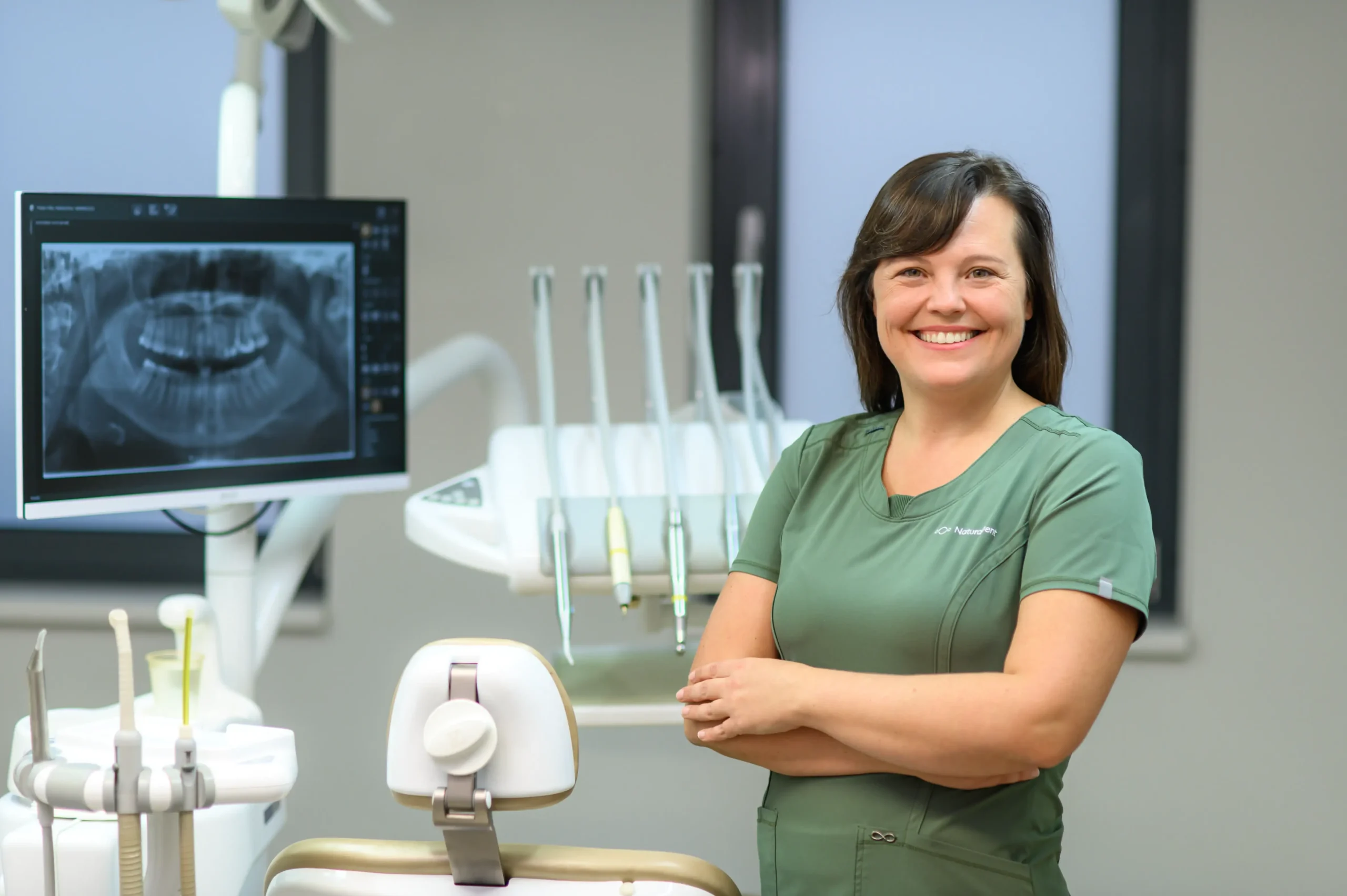
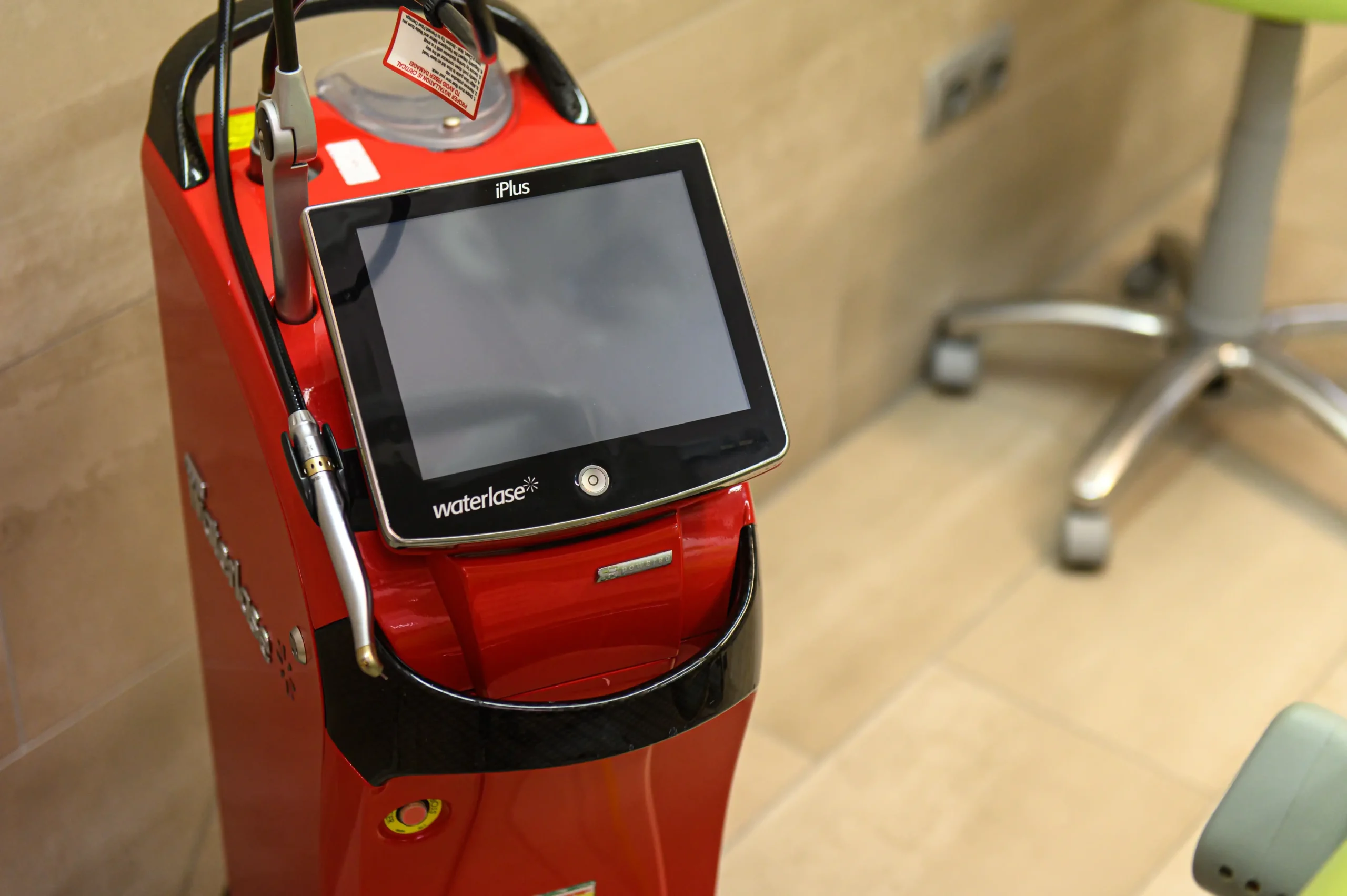
A NaturaDent egy olyan Dentistry BudapestWe are considered pioneers in the field of laser dentistry even on a national scale, as we have the largest and most advanced range of equipment, and our world-class technologies are operated by suitably qualified dentists.
We therefore know exactly what laser dentistry is, and what criteria a clinic must meet in order to use this term.
The essence of laser dentistry is that, during dental procedures, practitioners use specialised laser light wherever possible and where clinically indicated.
Dental lasers are based on focused light energy, which can be used to cut, disinfect or even stimulate tissues as required, in order to achieve the best possible results. What’s more, they offer faster healing times and cause less tissue damage.
Laser technology is based on light beams of different wavelengths, and the settings are always adjusted to suit the treatment of either hard or soft tissues. This is why it is particularly important to have suitably trained and experienced staff in a laser dentistry practice.
The benefits of laser dental treatments
Now that we have a clear understanding of the background to laser dental treatments, we will outline below the beneficial characteristics that make the use of dental lasers particularly advantageous:
Less pain during treatment
This is undoubtedly one of the biggest advantages – particularly for those who are apprehensive about dental treatment. Among the dental practices in Budapest, NaturaDent, for example, stands out for its focus on pain-free treatment, and laser technology plays a huge part in this.
Of course, anaesthesia is also required during laser treatments, but there may be procedures where no pain relief, or only a smaller dose, is needed to ensure that patients do not experience any discomfort.
The reason for this is that, unlike conventional drills or cutting instruments, the laser works with much greater precision; unlike with a rotating drill, the laser beam does not cause the tooth tissue to heat up, and so it causes less damage and the procedures are less painful.
It is also worth noting that the dental laser is able to immediately block nerve endings, which helps to reduce pain – particularly during procedures that involve the gums or various soft tissues.
A major advantage of laser teeth whitening, compared with other traditional whitening methods, is that the beneficial effects of the laser light reduce tooth sensitivity by sealing the micro-cracks in the enamel.
Less invasive procedures
It is important to note that the dental laser ensures treatment with exceptional precision, whilst causing no damage to the surrounding tissue. It allows for precise, non-destructive work, thus enabling less invasive procedures.
This is not generally the case with traditional methods. Although various dental drilling or cutting instruments are also effective, they often have a negative effect on the surrounding tissues, causing damage to them.
Not only does this prolong the healing time and increase pain, but in certain cases it also carries a significantly higher risk of infection. With laser dental treatments, however, there is no need to worry about either of these issues.
This is because laser light enables more precise tissue treatment and reduces pain, whilst also sterilising the area immediately, thereby minimising the risk of infection.
Less bleeding, infection and swelling
One of the greatest advantages of laser dental procedures is undoubtedly the fact that the laser is capable of cutting and coagulating tissue simultaneously, which means that it immediately seals and disinfects the treatment site.
This offers the following benefits:
-
Less bleeding: The laser is able to seal off smaller blood vessels during the procedure, thereby minimising bleeding, which helps to speed up the treatment and make it easier to carry out.
-
Lower risk of infection: As well as stopping the bleeding, the laser light is capable of sterilising the treated areas directly, thereby preventing bacteria from multiplying and reducing the risk of infection.
-
Tissues with less swelling: As there is no significant bleeding, and thanks to the use of sterilisation, inflammation and swelling occur less frequently following laser dental treatment, thereby reducing recovery times.
The above properties are beneficial in all dental procedures, but they are particularly useful in the treatment of gum disease or during various oral surgical procedures, such as bone grafting or dental implantation, when maintaining the sterility of the surgical site is of paramount importance.
Faster healing and recovery
Another significant advantage of laser dental treatments is that they can stimulate and promote the body’s natural healing processes.
This is because laser light not only sterilises, but also immediately triggers cell regeneration (a process known as photobiomodulation), which has a great many positive effects for patients:
-
Shorter recovery times: The sooner cell regeneration begins in the treated area, the sooner the patient can resume their daily activities.
-
Less welding: Laser treatments always minimise tissue trauma; they can be used gently and precisely, which means that much less scar tissue forms.
-
More effective regeneration: Laser dental treatments are much faster when it comes to regenerating tissues and gums, which increases the success rate of procedures such as implant placement or gum surgery.
These beneficial characteristics are particularly valuable for patients who, for example, cannot afford long recovery periods due to their work or lifestyle, and therefore need to return to work or their everyday activities as soon as possible.
Precision intervention options
When it comes to laser dentistry, it is certainly worth highlighting that it enables extremely precise procedures. It is so precise that it allows for targeted treatment of specific affected areas, whilst preserving the integrity and health of the surrounding tissue.
This feature is particularly important, for example, in the following cases:
-
Treatment of tooth decay: Unlike a drill, a laser is capable of removing only the decayed areas, thereby preserving as much healthy tooth structure as possible.
-
Root canal treatment: Experience shows that laser root canal treatment can be carried out with a much higher success rate than conventional methods, and indeed carries a lower risk of complications.
-
Surgical procedures: The dental laser ensures exceptional precision during surgical procedures, which not only has a beneficial effect on the long-term outcome of treatment, but also has an immediate impact due to its ability to stop bleeding and sterilise the treated area.
-
Gum reshaping: In gum contouring, it is extremely important that the procedure is carried out with the utmost precision for aesthetic reasons, removing as little tissue as possible. Laser treatments currently offer the highest level of effectiveness in achieving this.
Wide range of applications
Laser technology is being used in an increasing number of areas within dentistry; in other words, it is not merely a general service, but plays an indispensable role as a complementary tool in a wide range of treatments.
It is this versatility that ensures it is useful from both an aesthetic and a functional point of view.
At present, laser technology is used with particular effectiveness in the following areas of dentistry:
-
Laser removal of frenulum and labial frenulum: Unlike traditional surgical procedures, laser treatment offers faster and more precise results, with less bleeding, less pain and a quicker recovery.
-
Laser tooth extraction: Not only does it make tooth extraction less invasive, but it also helps to preserve the dimensions of the alveolar ridge, which not only aids healing but also facilitates options for tooth replacement.
-
Laser treatment for inflammation of the root tip: A faster and safer procedure than traditional bone exposure treatment involving drilling, whilst wound healing also occurs more quickly.
-
Laser root canal treatment: Compared with manual methods, not only can this procedure be performed more accurately using a laser, but the laser light also penetrates deeper into microscopic crevices, and the sterilising effect helps to increase the success rate of the treatment.
-
Laser gum contouring, frenulum resection: Whether it is gum contouring, gum correction, gum reshaping or gum recession treatment, the dental laser can perform this procedure more precisely and safely than any other method, whilst promoting faster healing.
-
Implantation and laser surgery: The laser helps to treat the tissues surrounding the implant, causing less trauma to the tissues and leading to a faster recovery.
-
Inflammation around an implant: One of the most unpleasant complications following implant placement can be inflammation, which can be effectively treated with a dental laser.
-
Laser teeth whitening: Faster results, a more powerful whitening effect, and a more even tooth colour.
-
Laser treatment of gum pockets, laser curettage, cleaning: In cases of periodontal problems and gum disease, faster healing and regeneration can be achieved in the affected area.
-
Laser treatment for cold sores and mouth ulcers: As well as providing rapid pain relief, it effectively treats lesions of the oral mucosa and also reduces the likelihood of recurrence. Faster recovery.
Frequently asked questions
Which is the best laser dentistry clinic in Budapest?
NaturaDent Dental Practice plays a pioneering role in laser dentistry not only in Budapest but throughout Hungary, as it offers patients the country’s largest and most advanced range of equipment, operated by highly qualified and qualified and experienced dentists.
Since when has laser technology been used in dentistry?
The history of dental lasers dates back to the 1990s, as the first device was approved in 1990 – at that time, it was intended solely for soft-tissue treatments. The technology therefore has a history spanning several decades and is constantly evolving.
Is laser dental treatment safe?
Provided that the equipment is of the right standard and the professionals are sufficiently qualified, laser dental treatments are completely safe.
Are laser treatments painful?
They cause less pain than conventional treatments, but as patients are usually given an anaesthetic before the procedure, there is no significant difference in this respect compared with conventional methods. It is, however, a fact that laser treatments are gentler.
Can laser dental treatments be used on children?
Of course, but it requires a completely different procedure. In children, it is often even more beneficial to use this method, as it causes less pain and leads to a quicker recovery.
Can laser treatments be used on pregnant women?
The laser itself only has a local effect, so it does not adversely affect the foetus; however, as with most dental treatments – where X-rays or anaesthesia are required – it is worth considering postponing the procedure until a later date.
Are there any limitations to dental lasers?
Dental lasers have undergone tremendous development in recent years, which is why they can be used effectively for an increasing number of problems; however, there are, of course, still treatments or cases where we have to rely on traditional methods.
Is laser treatment more expensive than conventional treatment?
Yes, because of the technological costs, but in terms of value for money, we get a much better and more effective service, which is often more beneficial from an aesthetic, health and recovery perspective.