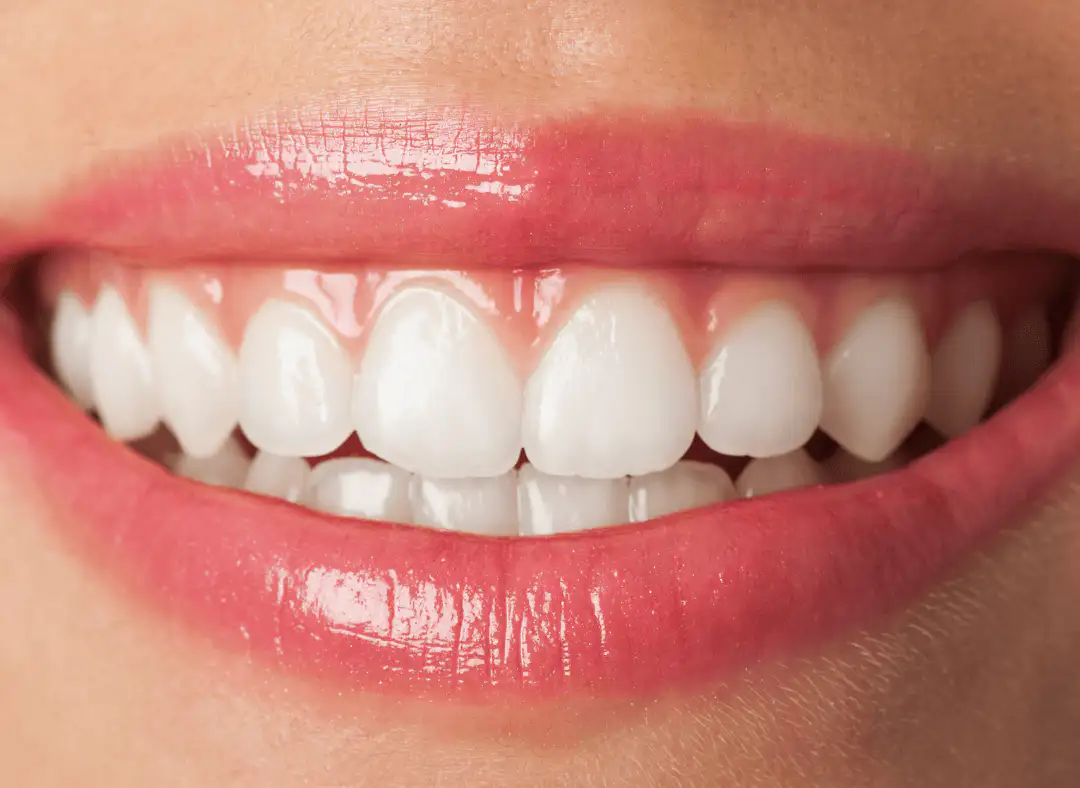



Surely everyone has marvelled at the smiles of the biggest Hollywood stars, as most of them flash dazzling white teeth on the red carpet. Why aren't our teeth as gleaming? What do they do differently?
It is a mistake to believe that pearly white teeth are a genetic predisposition, or that they can only be achieved with expensive toothpastes or treatments. The secret of celebrities is usually found in regular teeth whitening, of which we know several types in modern DentistryBan.
How it proceeds Teeth whiteningDoes it damage teeth? What types are known at all? In our current article, we sought answers to these questions, with particular emphasis on those available through NaturaDent's services. Biolase laser teeth whitening.
This modern and innovative solution represents a whole new level in the world of teeth whitening, so it's definitely worth getting to know, as it allows us to achieve teeth that are several shades whiter without side effects or pain.
Countless factors influence tooth colour.
When it comes to the colour of teeth, it's important to know that very few people have a completely snow-white shade. The reason for this lies in genetic factors, as the colour of teeth is fundamentally determined by the components found in tooth enamel and dentine.
However, we can ruin the base colour with countless external factors. If, for example, plaque builds up on the surface of the teeth and we do not take care to remove it regularly, it can permanently discolour the teeth.
Plaque first forms as dental plaque, and over a longer period, tartar develops, which appears as a yellowish, later darker brownish discolouration on the teeth.
This not only poses an aesthetic problem but also causes a series of other discomforts, thus promoting the settlement of bacteria, and later can lead to periodontal disease, frequent or constant gingivitis, tooth sensitivity, and in the final case, tooth loss.
Certain foods have a particularly detrimental effect on tooth colour. Examples include coffee, tea, as well as the regular consumption of berries and beetroot. In addition, smoking also plays a significant role in teeth developing a yellowish hue.
In such cases, teeth whitening offers a good alternative to improve the overall appearance by a few shades, or to fully restore the original colour of the teeth.
When is teeth whitening not applicable?
Of course, there are cases where teeth whitening is not advisable. This is precisely why it is recommended to have it carried out in a dentist's practice, within a professional setting, as specialists can immediately identify any problems that might cause issues in such instances.
Among the exclusion factors, we can immediately find dental calculus. If a large amount of calculus has accumulated on the patient's teeth, it must first be professionally removed, which can also lead to some minor improvements.
In addition, teeth that are decayed, inflamed, or otherwise diseased cannot undergo teeth whitening, and gum inflammation and other gum conditions also prevent the procedure.
It is also necessary to highlight fillings that do not seal properly, as well as developmental abnormalities related to teeth and enamel defects. It is important to note that fillings cannot be whitened along with natural teeth. In such cases, the filling needs to be replaced after teeth whitening.
Although the materials used for teeth whitening are not harmful to health, pregnancy and breastfeeding are still strong exclusions.
What are the options for teeth whitening?
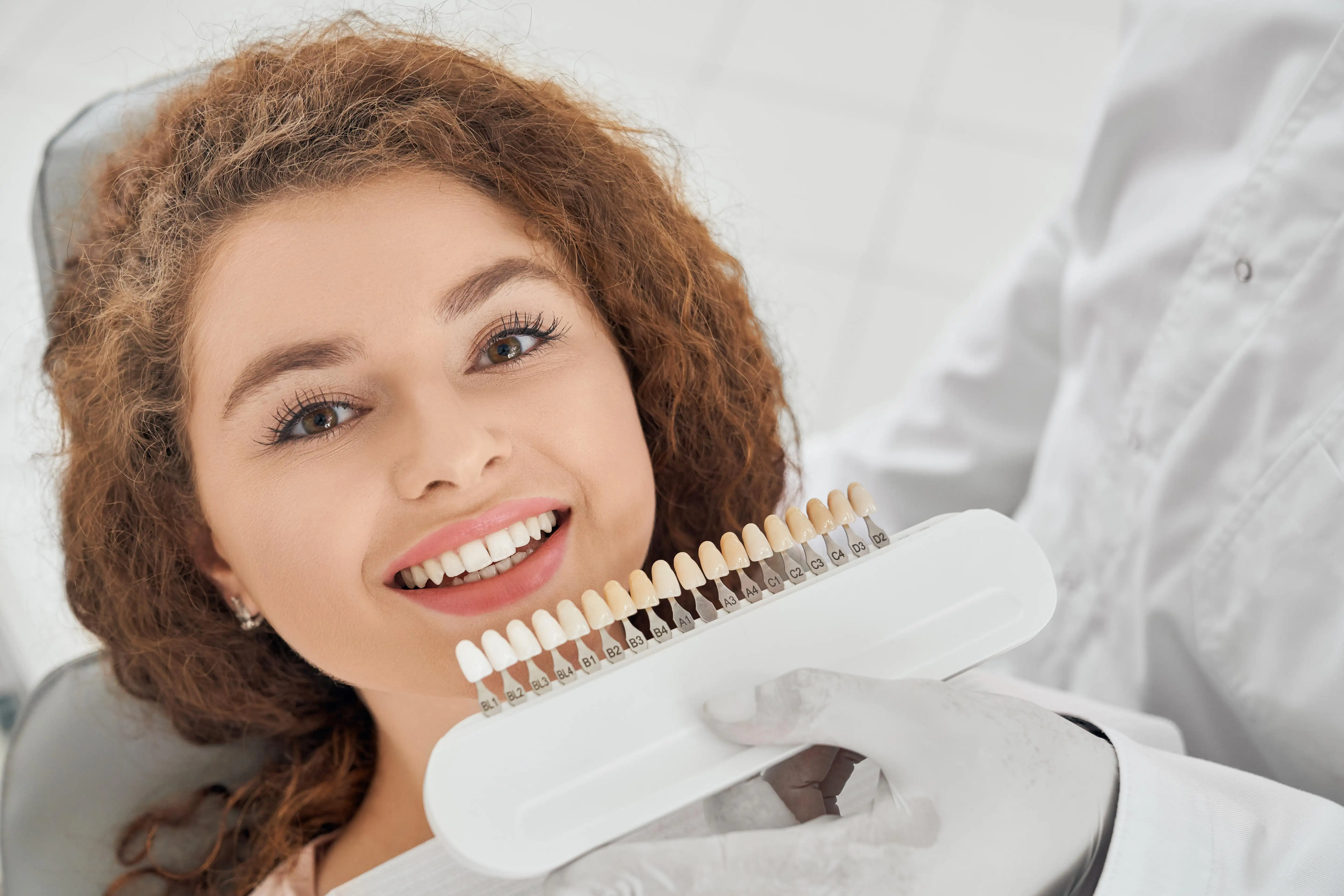
There are essentially two main groups of teeth whitening that we can distinguish. We can talk about in-clinic dental treatments and at-home, but controlled, solutions.
However, it is important to emphasise that at-home teeth whitening does not refer to questionable, often dangerous and ineffective homemade remedies, but rather a procedure carried out according to a professional's instructions.
If you have your teeth whitened in a dental practice – especially with NaturaDent Biolase laser technology – you will achieve both a spectacular and immediate effect, and the treatment will take place within safe parameters and under continuous supervision.
The effect of such an intervention can last for years and only 60-90 minutes are enough to achieve the desired result.
Home teeth whitening under professional supervision can also be an effective solution, but it is not a very fast alternative. It takes longer to achieve the desired effect. However, this technique can only be used if there are no visible fillings or restorations.
Why choose Biolase laser teeth whitening?
As mentioned above, one of NaturaDent's specialities is Biolase laser teeth whitening, which has numerous advantages over traditional methods.
On the one hand, a lightning-fast result can be achieved with it, as it only takes an hour for the teeth to become up to 12 shades whiter, although the effect naturally depends to a significant extent on the condition of the patient's teeth.
In addition, Biolase laser teeth whitening is built on the most advanced technologies, meaning that alongside its speed, it is very gentle on both teeth and gums, and is also free from harmful substances, thus avoiding unpleasant side effects.
An effective alternative, whether discolouration is caused by smoking, excessive coffee or tea consumption, or other triggers.
Furthermore, the advantage of laser technology is that it does not affect tooth sensitivity; on the contrary, its application can reduce sensitivity to hot and cold stimuli. We also use laser treatment by itself to reduce tooth sensitivity.
In the hands of NaturaDent's experienced specialists, the Biolase laser teeth whitening device not only guarantees that your teeth will become several shades whiter, but it also reduces their sensitivity.
How Does Laser Teeth Whitening Work?
In addition to its effectiveness, Biolase laser teeth whitening offers a particularly quick alternative to smiling again with abandon.
Although the use of supplementary methods is recommended for fillings, crowns, bridges and dentures, it provides an immediately visible result on the surface of a live tooth.
The first step in this process is always a thorough dental hygiene treatment. This is because it is very important that laser teeth whitening can only be applied to a tooth surface that has been cleaned of tartar.
However, it should be noted that it is not recommended to have teeth whitening immediately after tartar removal, so a few days' break is necessary. The duration of this break is always determined by the qualified dental hygienist performing the treatment, based on the expected regeneration time.
Provided the gums and teeth have completely healed following the dental scaling, Biolase laser teeth whitening can commence.
The first step is to apply a special LaserWhite gel to the teeth. This is then illuminated with the Biolase laser, which can accelerate the whitening process.
During the intervention, we divide the dentition into the lower and upper jaw, which ensures gradual progress. The laser needs 30-40 seconds to activate the bleaching agent in the gel.
After illumination, we rest the treated jaw for 10 minutes, and only then do we proceed to the next jaw.
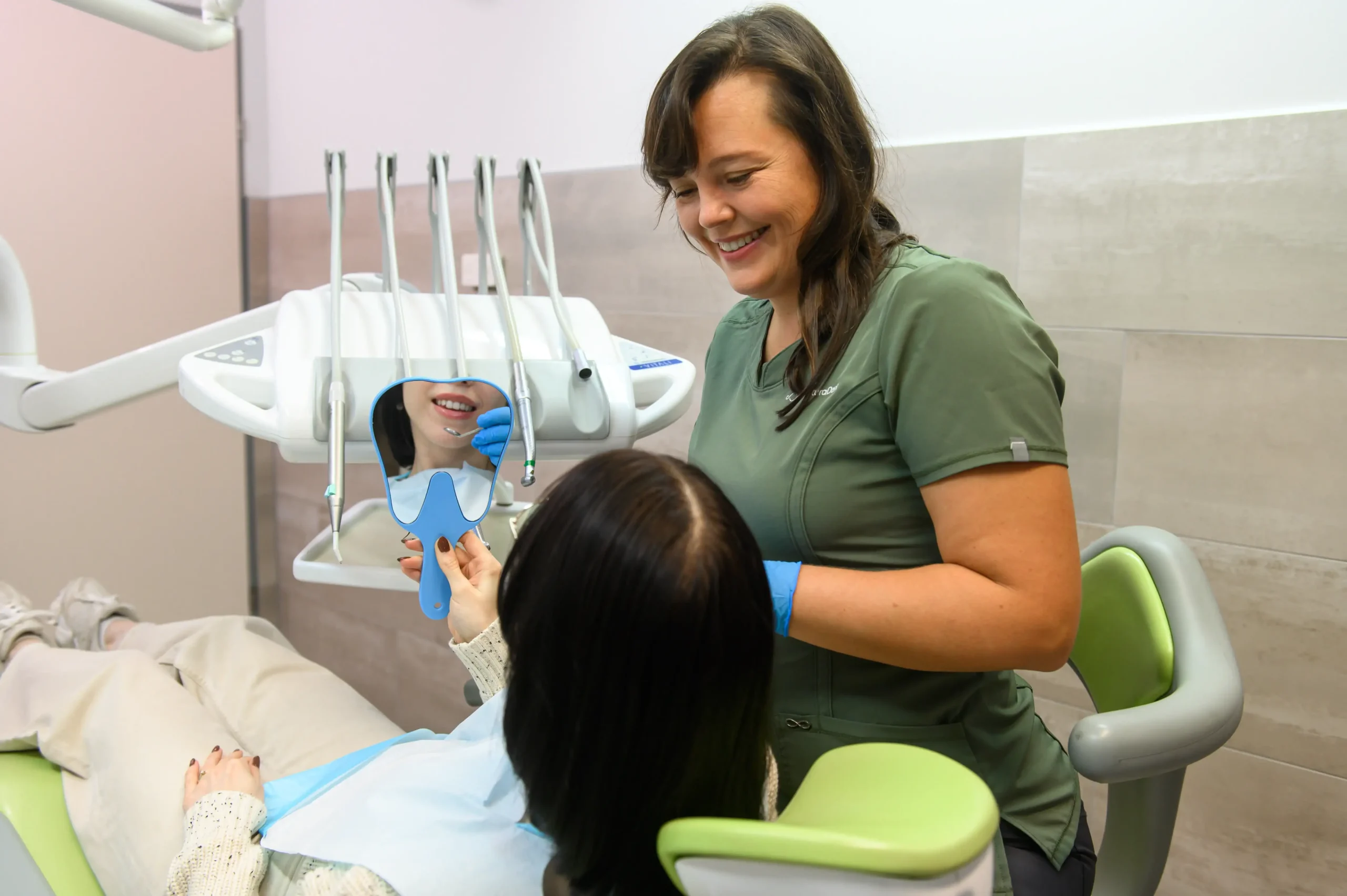
The entire treatment takes approximately 60-90 minutes. The final step in every case is to remove the LaserWhite gel from the teeth, and then we marvel at the brilliant final result together with the patient.
What to do after teeth whitening?
As we've emphasised above, Biolase laser teeth whitening is exceptionally gentle on teeth, however, after the procedure, it will still be important for patients to pay attention to a few minor details.
The most important thing is hydration. It's worth increasing your water intake after teeth whitening, as the process causes teeth to lose some of their moisture, which needs to be replaced. Otherwise, the nerves can become temporarily more sensitive, leading to a temporary dull aching sensation.
However, with adequate hydration, this can be completely eliminated within 12-24 hours, so tooth sensitivity disappears, and furthermore, due to the laser treatment, we can say goodbye to the previously experienced sensitivity to both hot and cold.
It is also recommended to avoid foods with strong staining effects on the teeth for at least two days after teeth whitening. Examples include coffee, tea, red wine, beetroot, and certain berries.
In all cases, smoking should be avoided at this time, as should the consumption of fizzy drinks rich in dyes, and indeed, for ladies, the use of strong lipstick is also not recommended.
Adhering to these rules can help us to enjoy the results of teeth whitening durably.
In the event that we cannot give up any of the above foods, we should always rinse with two or three sips of water after consuming them, which can help reduce the negative effect of teeth discolouration.
How long does teeth whitening last and how often can it be repeated?
How effective teeth whitening is durable, This can be influenced by a great many factors. Genetics is at least as decisive in this respect as the patient's lifestyle.
If we opt for professional treatment, the effect can last for 1-3 years, but if we follow an unhealthy diet, consume a lot of coffee, and smoke heavily, our teeth can lose their shade again within a few months.
The effect can of course be delayed by using teeth whitening toothpastes, but also by using the correct brushing technique.
However, the question arises as to how often professional teeth whitening can be requested after this. In this regard, it is always advisable to seek the help of a professional, who can only give a personalised answer after a thorough examination.
The frequency of intervention can be significantly influenced by the patient's lifestyle, the condition of their teeth, as well as the results achieved during previous teeth whitening.