




When oral hygiene is poor, it is common for tooth decay, after destroying the enamel and dentine, to reach the pulp of the tooth. This, almost without exception, causes inflammation and significant pain in all cases.
A toothache is one of the worst toothaches, very difficult to soothe. This is because the tooth pulp contains a lot of nerves, which are directly connected to the brain's pain receptors.
This condition requires prompt intervention, and the elimination of pain, as well as the saving of the tooth, can usually only be achieved through root canal treatment.
What you need to know about root canal treatment, how the process works, and what actually happens during the procedure. In our article, we have gathered all the important information about this dental procedure!
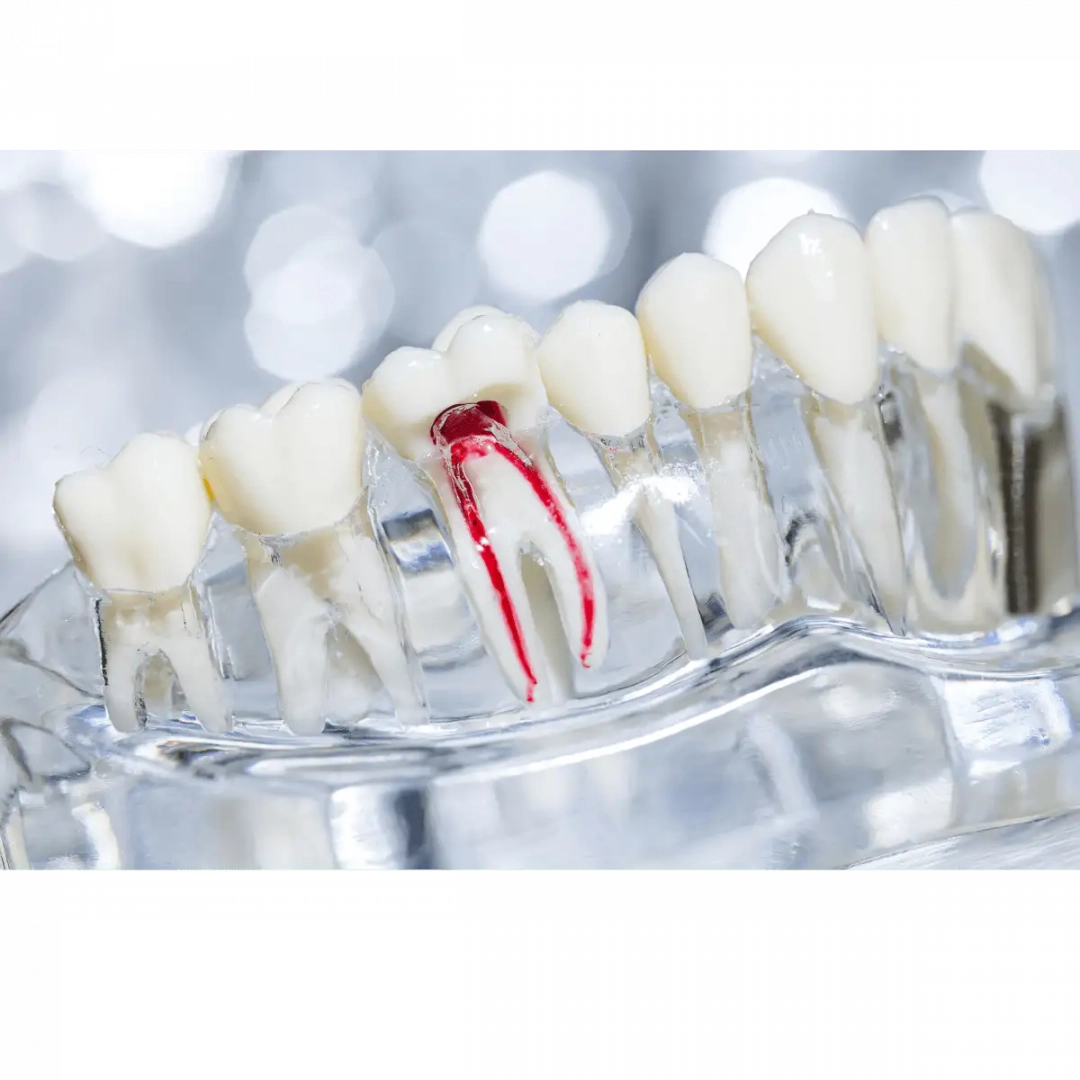
Root canal anatomy
To better understand the essence of root canal treatment, it is very important to understand the anatomical background of the process, which can help to understand the procedure, as well as why the pulp needs to be removed in such cases.
It's important to know that teeth are made up of multiple layers. The outer layer is hard enamel, which provides protection to the underlying dentine, as well as the innermost and most sensitive part, known as the tooth pulp.
However, it should be known that tooth enamel only protects the crown of the teeth; for the tooth root, this task is performed by a kind of cement layer.
From the perspective of root canal treatment, the condition of the pulp is the most important, as it contains many blood vessels and nerves that can cause pain and inflammation due to external factors.
If decay breaks through the tooth enamel and penetrates the dentine layer, it will reach the pulp region, where inflammation and associated swelling will occur due to the numerous nerve endings.
As the process occurs in a closed system, practically in a confined space, it results in immense pain in almost all cases. This can be eliminated by root canal treatment, which actually involves the removal of the pulp and the inflamed nerves entering through the root tip.
What Causes Pulpitis?
Although we have described in several places above that pulpitis is most often caused by decay, which can be linked to poor oral hygiene, other causes can also be behind it.
Inflammation of the dental pulp can also occur in healthy teeth if the patient has developed periodontal disease and the associated infection has reached the pulp from the root apex.
When is root canal treatment still necessary?
In addition to inflamed dental pulp, root canal treatment may be necessary in a number of other cases. The most common of these are:
- The death of the pulp can be accompanied by characteristic symptoms, such as strong discolouration of the tooth, but most often it is not painful.
- Inflammation appearing at the root tip of previously root-treated teeth, which can lead to focal disease.
- In cases of extensive decay, where the dental pulp is exposed during treatment, root canal treatment is necessary to prevent secondary infection.
What Are the Possible Complications of Not Having Root Canal Treatment?
As root canal treatment is typically necessitated by inflammation of the tooth pulp, which causes extremely severe pain, the treatment is rarely postponed, but if it is, it can have a number of complications.
The biggest problem in such cases is the spread of inflammation, which can affect the adjacent teeth and cause a cumulative problem.
It may be that although the pain subsides due to the complete death of the pulp, the inflammation remains, and can thus spread to adjacent teeth.
Inflammation can cause a fistula to form around the tooth, leading to the continuous discharge of accumulated pus into the oral cavity. This can cause a lot of discomfort, including bad breath.
The infection can even affect the jawbone, which can lead to tooth loss or facial disfigurement.
Research on carious teeth has proven that they can increase the risk of developing certain systemic diseases. These include, among others, diabetes and certain heart conditions.
If an inflamed tooth is in an advanced stage, swelling, fever, malaise, and chills may occur, and it can even spread to the surrounding tissues, which can inflame other organs.
The steps of root canal treatment
Root canal treatment is always a multi-stage procedure. Pain often ceases or diminishes after the first appointment, but the entire process is far from over. Let's look at the steps of root canal treatment:
Diagnosis
As root canal treatment is an irreversible procedure, it is essential that the dentist first investigates and diagnoses the problem to ascertain if this is indeed the required solution.
For this, an X-ray is usually required, which can show the exact location of the affected area and the state of inflammation, which is extremely important for treatment.
The dental X-ray used at Naturadent is the state-of-the-art Japanese Morita 3D CBCT digital device, which operates with extremely low radiation exposure, making it safe for most patients.
Opening the fog
Once the dentist has using an X-ray Once the problematic tooth has been diagnosed, the first step in any root canal treatment will always be to open up the crown, which, of course, is carried out whilst the patient is under anaesthesia.
Through the crown, the dentist can access the pulp, the removal of which forms the basis of root canal treatment.
Root canal treatment
Root canal treatment is mostly carried out with a special instrument, the so-called root canal file. With its help, the root canals can be gradually explored and infected tissues, tissue debris can be removed from them.
At Naturadent, root canal treatment is performed using the most modern equipment, the VDW Gold apex locator and endomotor. This is a machine-driven root canal opener and digital measuring device, which allows the dentist to continuously measure the length of the root canal, ensuring that the future root filling will reach precisely and securely to the tip of the root.
Root canal treatment with a laser
It should be noted here that the method just presented is rarely used on its own further west of us, as dentists in the West rarely perform root canal treatments without a laser and microscope, which is not yet widespread in Hungary. Laser dentistry treatments are taught in our country by Dr. Márta Fülöp Papp at the Naturadent clinic in Budapest and also in the countryside across the country.
In our country, this method is currently only available at the NaturaDent practice, which is much gentler and more effective, as the root canal is disinfected with a dental laser, and the opening and filling are done with the help of a special microscope.
This procedure helps ensure that the patient's root-treated tooth continues to provide a secure foundation for many years, possibly even decades.
If you need laser microscope root canal treatment, please click on the following link:Dentistry in Budapest.
Medicinal root canal treatment
After the root canal has been completely cleaned of dental pulp and inflammation-causing bacteria, the problematic tooth is first sealed with a temporary medicinal filling. The medicinal filling is essential for the proper healing of the tooth.
Normally, this filling remains in the tooth root for 7-10 days.
Final root canal
If the patient does not experience any discomfort after 7-10 days, the medicinal root filling will be removed, and then the root-treated tooth can be permanently sealed.
This is a very meticulous process, as a good quality root canal filling must completely fill the entire canal without gaps and reach the root tip, otherwise it can cause further unpleasantness later on, with reinfection.
How painful is a root canal treatment?
Root canal treatment is now always carried out under local anaesthetic, and thanks to modern painkillers, you will feel practically nothing during the procedure.
Most patients generally feel better during treatment, as an inflamed tooth usually causes unbearable pain that is often very difficult to relieve even with medication.
What can we expect after root canal treatment?
Following final root canal treatment, the patient typically experiences no further symptoms or discomfort, the saved tooth will be fully functional, and the pain and sensitivity will disappear.
It can rarely happen that the patient is allergic to the filling material used. This should be reported to the dentist immediately in all cases, who will then explain the necessary steps.
Following medicinal root canal treatment, some discomfort may still be experienced.
In relation to root canal treatment, it should definitely be emphasised that a minimal amount of pain may still occur for a day or two after the medicated root canal filling, which can better be described as a kind of aching sensation.
This is caused by discharge produced as a result of inflammation, which can be accompanied by pain, but it will resolve on its own within a few days and over-the-counter painkillers can also help to alleviate the discomfort in the meantime.
If the painkiller is not effective and the pain is significant, or even becoming unbearable, this must be reported to the dentist as the procedure may need to be repeated.
If the inflammation was severe, taking antibiotics is also advisable.
It's possible that root canal treatment was needed due to severe inflammation, for which a course of antibiotics is essential. This will help reduce the inflammation, lessen the pain, and save the tooth.
The prescribed medication should be taken according to the prescription – preferably with a probiotic – which can speed up and facilitate the healing process.