


Tartar is one of the most general and common dental problems. It can be observed in most people, as it can develop even with thorough oral hygiene in the more difficult-to-reach interdental spaces or at the neck of the tooth.
Contrary to popular belief, it does not merely cause aesthetic problems; it is therefore essential to ensure that it is professionally removed at regular intervals. The the cost of professional tartar removal It depends on the technology chosen and the contents of the package.
There are many home remedies for this, but most of them are completely ineffective or dangerous, and in any case questionable, so it is recommended to leave it to a dental hygienist.
The NaturaDent dental hygiene treatment for example, by highly skilled, qualified professionals, using 3D scanners and artificial intelligence to ensure the most accurate result possible.
In our current article we have examined the tartar removal homemade methods, their disadvantages and finally, we also answered the question why it is better to leave it to a professional.
Why remove tartar?
However, before analysing the home practices, it is very important to discuss why it is necessary to get rid of seemingly harmless tartar in the first place, preferably in the most professional way possible, when it does not hurt and is hardly visible at first?
This is mainly because tartar is really nothing more than a fossilised form of harmful plaque, which initially causes only aesthetic discomfort, but later on can become increasingly bacterial.
Even in the short term, pathogens can cause inflammation around the gums, which without treatment can lead to permanent problems, in severe cases gum atrophy, and later even loss of teeth.
All this of course tooth sensitivity, This can prevent bad breath, bleeding gums, and tooth decay, as plaque makes it more difficult to clean teeth of tartar, causing them to rot. However, all of this can be easily prevented by regularly removing tartar!
Removing tartar at home: these are the best-known „miracle cures”
As we have already described above, the majority of people know some kind of „miracle cure” with which they can easily tackle tartar. However, it should be known that most of these are ineffective or at best offer partial results, and some of them are even dangerous.
Baking soda
One of the best-known home „miracle cures” for tartar is bicarbonate of soda. This is not surprising, as it can also be effectively used for limescale build-up in bathrooms, so it stands to reason that it won't have any trouble cleaning our teeth either.
Many people just put a little on the toothbrush and rub it thoroughly over the surface of the teeth. What you can't deny about baking soda is that it does have antibacterial properties and it's also good for bad breath for a while.
However, it is not very effective against tartar. It does remove small plaque and discolouration, but it can't deal with hardened, larger tartar, even with vigorous scrubbing.
In fact, if used too often, the substances in baking soda can unfortunately damage tooth enamel!
Only
Salt is every bit as much of a „miracle cure” in Hungarian households as baking soda. In addition to flavouring food, many people use it against limescale or to remove thick dirt accumulated on cookware.
This is probably why many people think that salt is also effective against tartar. Unfortunately, however, we must disappoint everyone: although a small whitening effect can be achieved with salt, it has no effect on tartar.
What's more, frequent rinsing with saline solution or brushing your teeth with salt can not only drastically damage your tooth enamel, but will also not necessarily have a good effect on the mucous membranes or the health of your internal organs.
Hydrogen peroxide
Hydrogen peroxide is a key ingredient in toothpaste production. It is a proven ingredient with excellent antibacterial and antifungal properties, making it highly effective for disinfecting the oral cavity and even for loosening soft plaque.
But no more than that! Hydrogen peroxide is completely ineffective against hardened, thick and discoloured tartar, but more importantly, it is practically a cleaning agent and should not be used in the oral cavity on its own.
Hydrogen peroxide is an ingredient in hair dyes, chlorine-free disinfectants and even jet fuel. Regular use can damage both tooth surfaces and oral tissues.
In fact, even a single application can be enough if you don't know the ratios and use a concentration higher than 3 percent.
Orange peel
As it is easily available to almost anyone, orange peel is a very common method of home remedies for tartar removal. Citrus fruits are known to contain citric acid, which has a natural corrosive effect on the oral cavity.
Regular application can help remove smaller plaques, but since you have to rub your teeth with the white part of an orange peel, one fruit peel is often not enough to cover your entire set of teeth.
Although it's a very simple method, in practice it's at least as useless, as it's difficult to reach every single tooth surface in this way, but even if you succeed, we can't expect any results with already hardened tartar.
Lemon juice
Lemon juice, due to its high citric acid content, is also a frequently used natural „wonder remedy” in Hungarian households. Many people use it against limescale or other stubborn dirt, but some braver individuals even try it for tartar.
However, this is extremely dangerous, as the acid in lemon juice has a strong corrosive effect even in small quantities, so without dilution it can actually erode the tartar a little, but it also dissolves the tooth enamel!
With a bit of exaggeration, the worst thing you can do against tartar in the home, especially if you have very sensitive teeth, is to use lemon juice, which can exacerbate these symptoms.
Most home practices are recommended to be forgotten
The examples above may have clarified that home methods of tartar removal are not without risk, but we would also caution everyone against using practices that seem illogical.
Many people, for example, recommend chewing sesame seeds, cloves, or walnuts all day long to combat tartar, which fundamentally do not harm the teeth, but also do not remove tartar.
Whatever home method you use, always bear in mind how hard tartar is, and how fragile tooth enamel or gums are.
With this in mind, there's no question that most home tartar removal solutions are both a waste of time and dangerous. So safe and long-lasting results can only be achieved with the help of a dental hygienist.
Why hire a dental hygienist to remove tartar?
The removal of tartar is a very complex task that requires not only the right expertise, but also tools that allow the lesion to be treated completely and gently.
We do not perform tooth extractions or fillings at home, and since tartar can be considered at least as significant a problem, it is recommended to consult a professional for this issue as well.
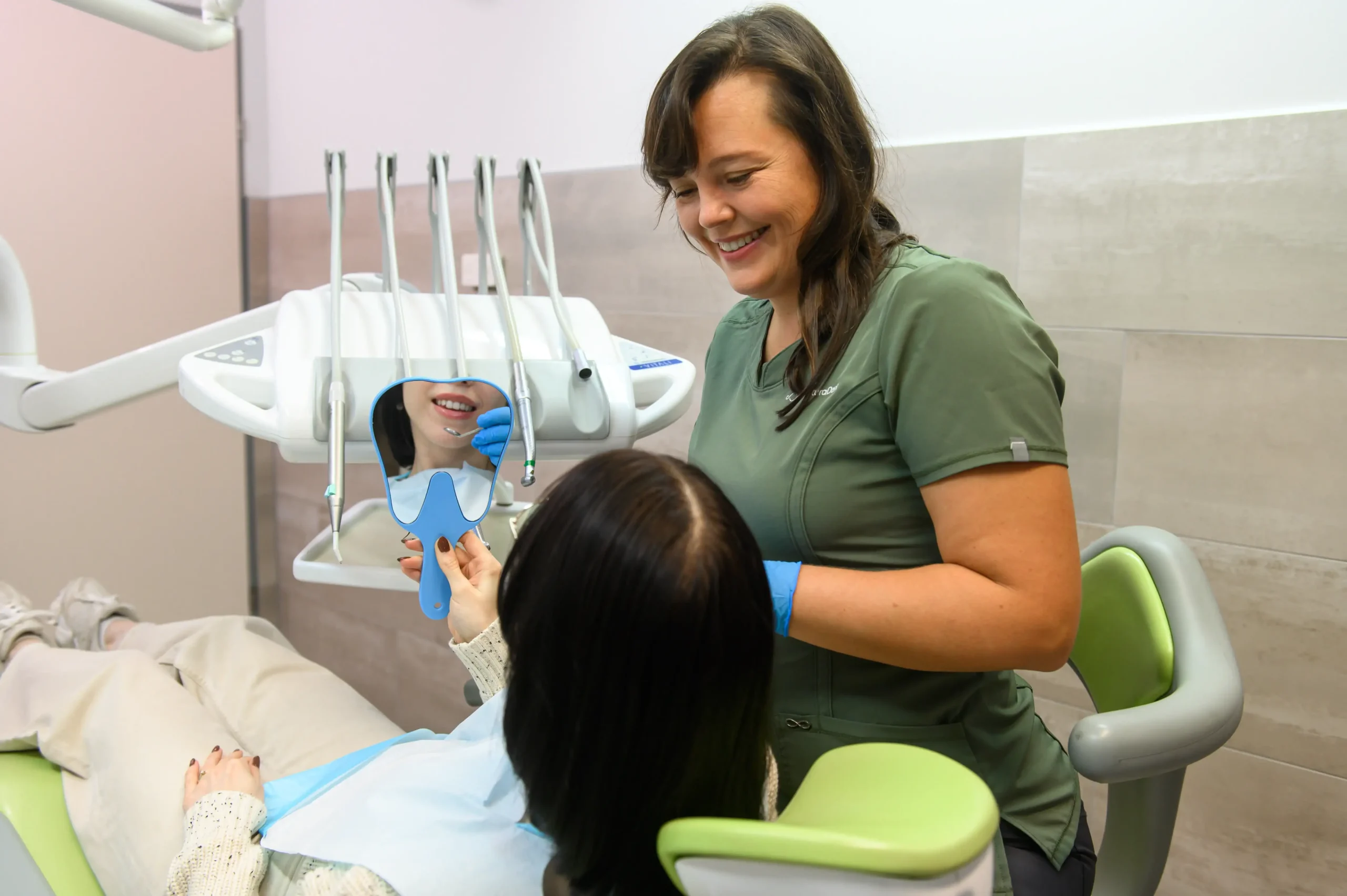
This task is carried out by dental hygienists, who can remove the deposits painlessly and risk-free by choosing the right technique, such as ultrasonic scaling, which is also available from Naturadent.
The reason it's still worth entrusting tartar removal to experts is primarily thoroughness. A well-trained and experienced qualified dental hygienist can remove even the most stubborn tartar from both the upper and lower dentition upon request, and even treating hard-to-reach areas isn't a problem for them.
Unlike home methods, here not only fresh plaque but also tartar that has been accumulating for years is removed.
Therefore, if we want completely tartar-free teeth, this can only be achieved with the help of a dental hygienist.
It's important to do everything you can to prevent tartar build-up
As mentioned above, tartar build-up cannot be completely avoided even with good oral hygiene, but with the right prevention you can do a lot to slow down the process.
The regular tartar removal so everyone needs it, but it makes a difference how much plaque we are talking about and how much damage it has done to the teeth or gums.
This can be effectively prevented by brushing thoroughly after every meal, paying particular attention to the sides of the mouth.
In addition, it is recommended to pay attention to cleaning between the teeth, as this is where plaque forms most easily. Dental floss or an interdental brush can be very useful, but you should also clean your tongue to minimise the number of bacteria left in your mouth.
It is also worth finishing every teeth brushing with the use of a special mouthwash. Especially beneficial from this perspective are mouthwashes made from natural ingredients, such as those containing tea tree oil.
Last but not least, you can also make a difference to tartar by changing your lifestyle, eating habits and avoiding harmful addictions.
Smoking and regular alcohol consumption, for example, can contribute to plaque formation, but too many sugary soft drinks or foods that are difficult to clean from the crown and interdental spaces can also increase the risk of tartar build-up.
If you want to avoid the unpleasant effects of tartar and get rid of it in a professional way, make an appointment now.